

In this article
Watch the movements first.
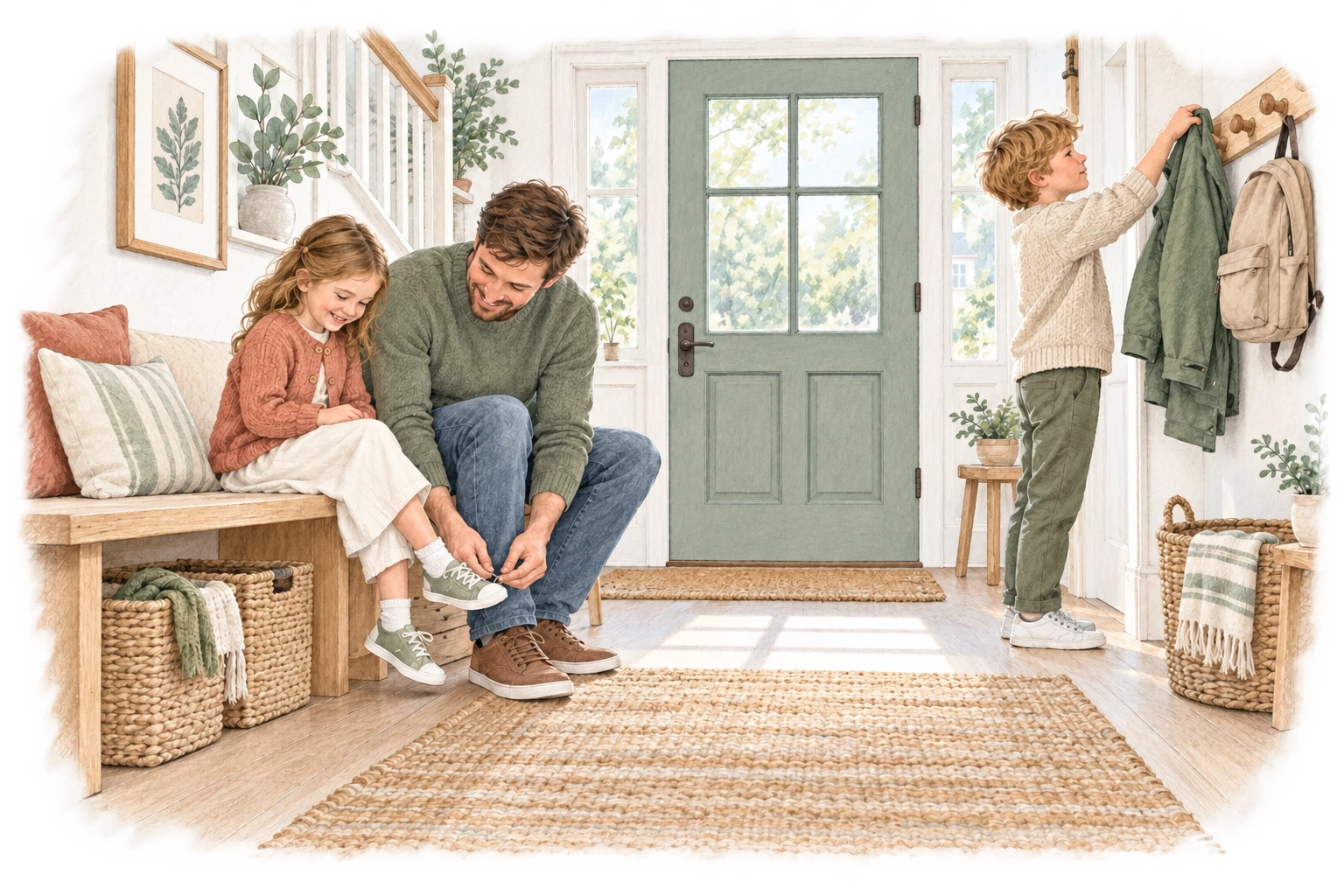
Over three weekdays, note where leaving the house stalls. Is the other glove missing? Does the door catch on a bag? Can your child reach their coat only with an adult’s help? A missing item, a narrow route and the wrong height each call for a different solution.
The entryway should not duplicate the whole wardrobe. The coats and shoes you wear now get the easiest places to reach. Storing out-of-season items elsewhere can give space back to daily movement.
Create a place to arrive and a place to leave.
Arriving home, your hands are often full. The bag needs somewhere to go that does not block the door. Wet shoes may need their own spot with a surface you can clean. Keep keys and grown-up odds and ends apart from the part the children use.
The leaving point can be a marked section of shelf for tomorrow’s PE bag or library book. If every “we’ll take it later” item stays there, it soon loses its purpose, so go through it together regularly.
Test it from a child’s height.
- Can the coat be taken down and hung back up?
- Can someone sit to put on shoes while others still get past?
- Does the person using the basket understand its label? A picture of their own can help younger ones.
- Does the storage stay stable, without tipping or wobbling, in use?
- Is the route still clear with a drawer open?
Test the heights with your own child. General size recommendations cannot replace this. If a hook might move later, think through how it is fixed and how the wall will be repaired.
Five things, five exact places
Choose the five things you search for most. For one week, give them a place using the storage you already have. At the end of the week, see which ones found their way back on their own and which places stayed empty. The empty ones may be too far from your real route.
In a narrow hallway, opening takes up space too.
The inner volume of a deep cupboard can be tempting, but the circulation left beside it matters just as much. Along with the overall size, mark the handle and the door swing. Sliding doors do not solve everything either: check which parts can be reached at the same time.
The aim is an arrival sequence that works: put down, take off, put away. If you are constantly in each other’s way at one point, change the layout first, and only then choose new storage.
Editorial team: InteriorVibe Family · September 2026