

In this guide
- Talk about use before colour.
- Write three lists together.
- A space of their own needs an agreement.
- Good pieces can stay from the old room.
- Give the conversation a concrete brief.
- A bigger bed alone does not make a new room.
- Let adaptable details express personality.
- Agree how the personal space works.
- Begin the conversation before choosing a wall colour
- A wider bed changes the rest of the room
- Put real hobby equipment on the plan
- Privacy, sound and a room that develops gradually
Talk about use before colour.
Ask what is hard to do in their current room. Is there nowhere for books while studying? Can friends only fit on the bed? Is the instrument or the sports kit always in the way? Their answers become concrete design tasks.
What you see as mess may be a work in progress. What they want to get rid of may hold memories for you. Talk these through separately: everyday use and keeping things safe do not always need the same place.
Write three lists together.
- Fixed limits: the size of the room, circulation, safety, the agreed budget and the valuable pieces to keep.
- Their decisions: for example pictures, textiles, smaller details and where personal things go.
- To decide together: larger furniture, lighting and elements that are harder to change.
The lists only help if they are genuinely left with choices. It should not turn out after every question that the answer had already been decided.
A space of their own needs an agreement.
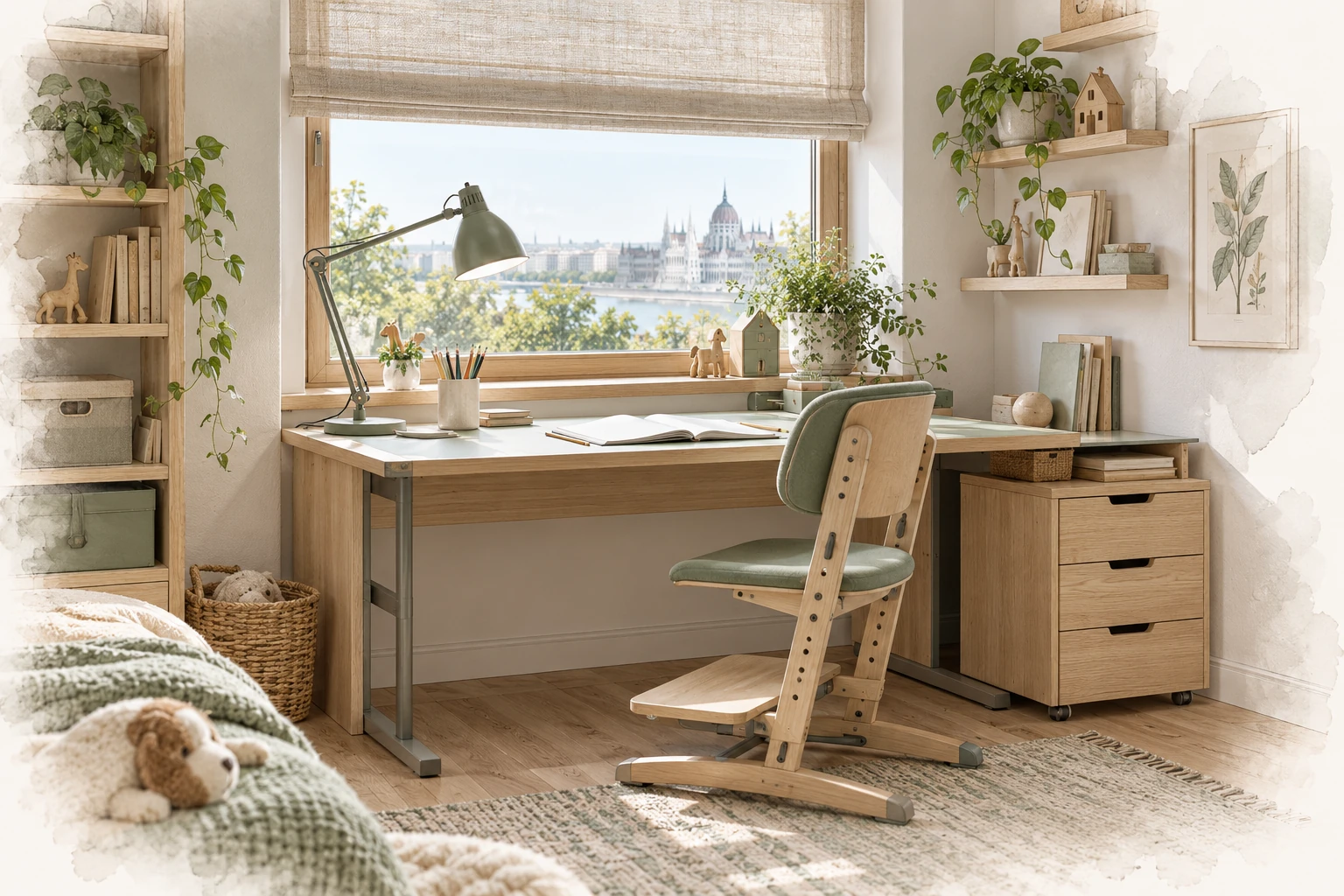
Knocking, borrowing and where shared things live cannot be solved with furniture alone. If they share the room with a sibling, talk to each of them separately about quiet, visitors and lighting.
A shelf or a curtain can separate areas visually, but each lets sound and light through differently. Before you choose a divider, look at the window, the heating, ventilation and safe circulation.
Two plans, one real trial
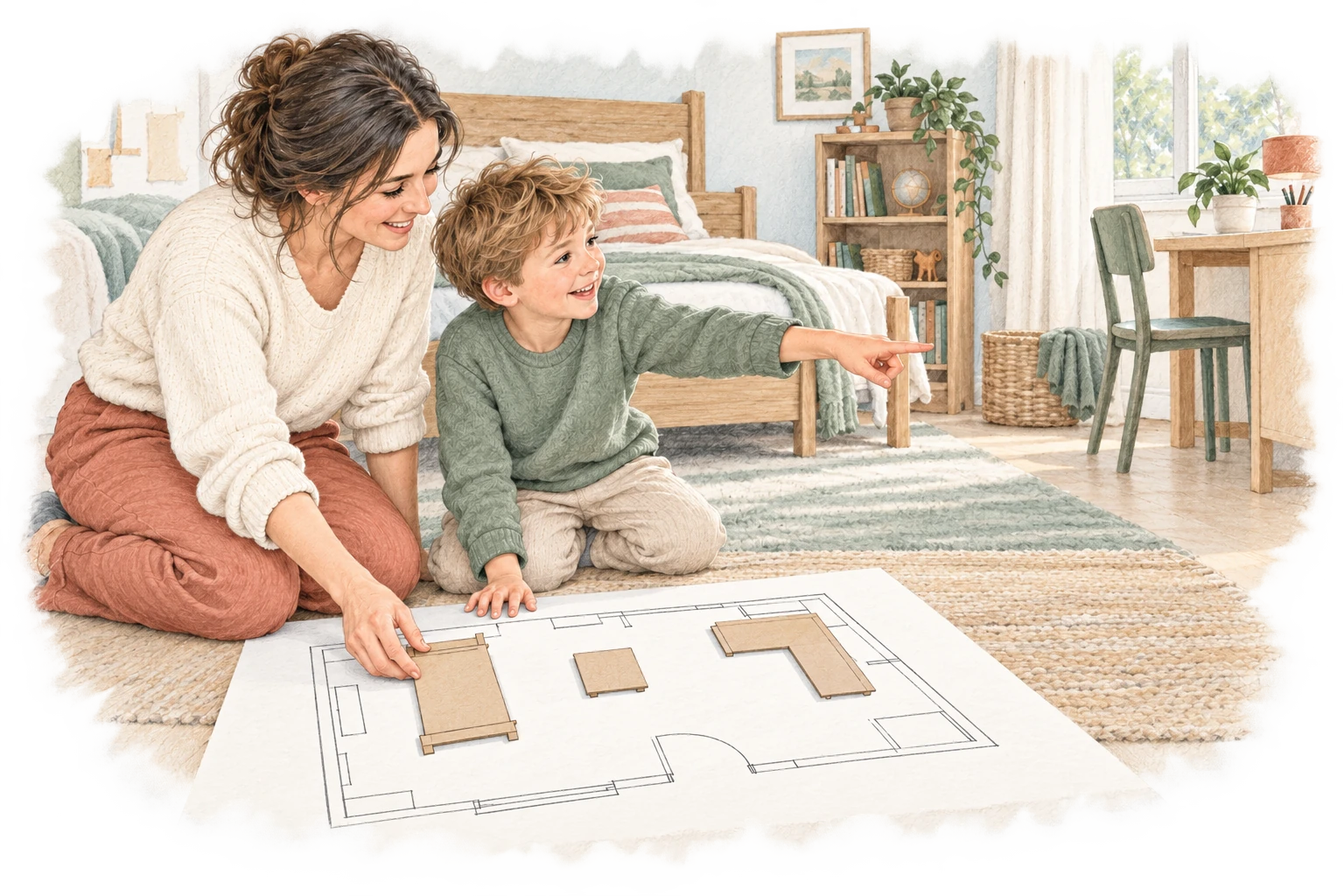
Make two simple layouts using the dimensions of your existing furniture. Mark where a possible new piece would go with paper on the floor. Open the wardrobe, pull out the chair and walk the routes. Only then add the mood images.
Good pieces can stay from the old room.
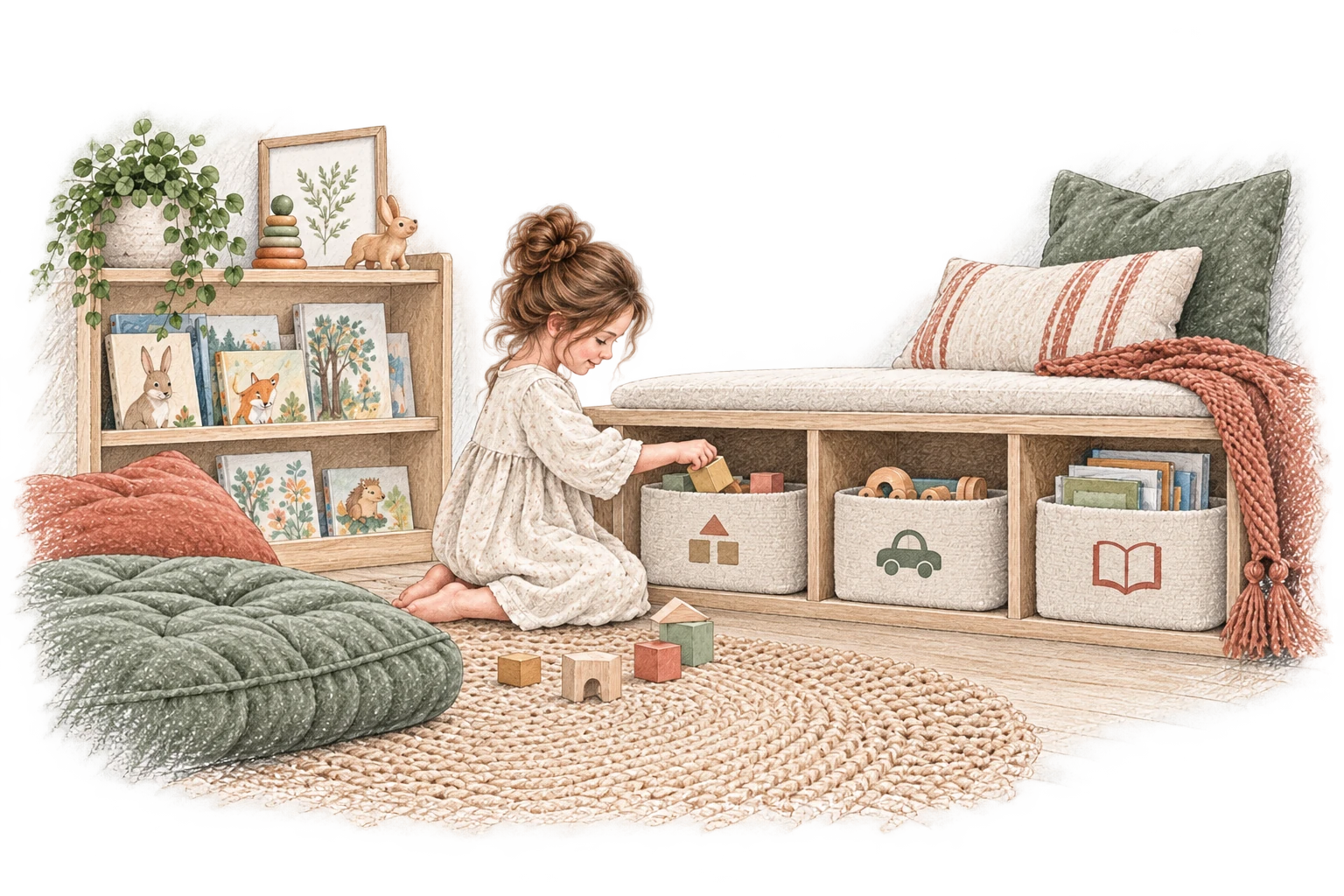
A well-sized basic piece in good condition can take on a new role. An old toy shelf can become a hobby shelf, if its load capacity and construction allow it. Always judge a conversion by the structure of the specific piece.
At the end, write a short order of steps: what you change now, what you try out and what you decide later. A personal room takes shape over time; not every wall and shelf needs to be final on the first day.
ON THE DESIGN TABLE
Give the conversation a concrete brief.
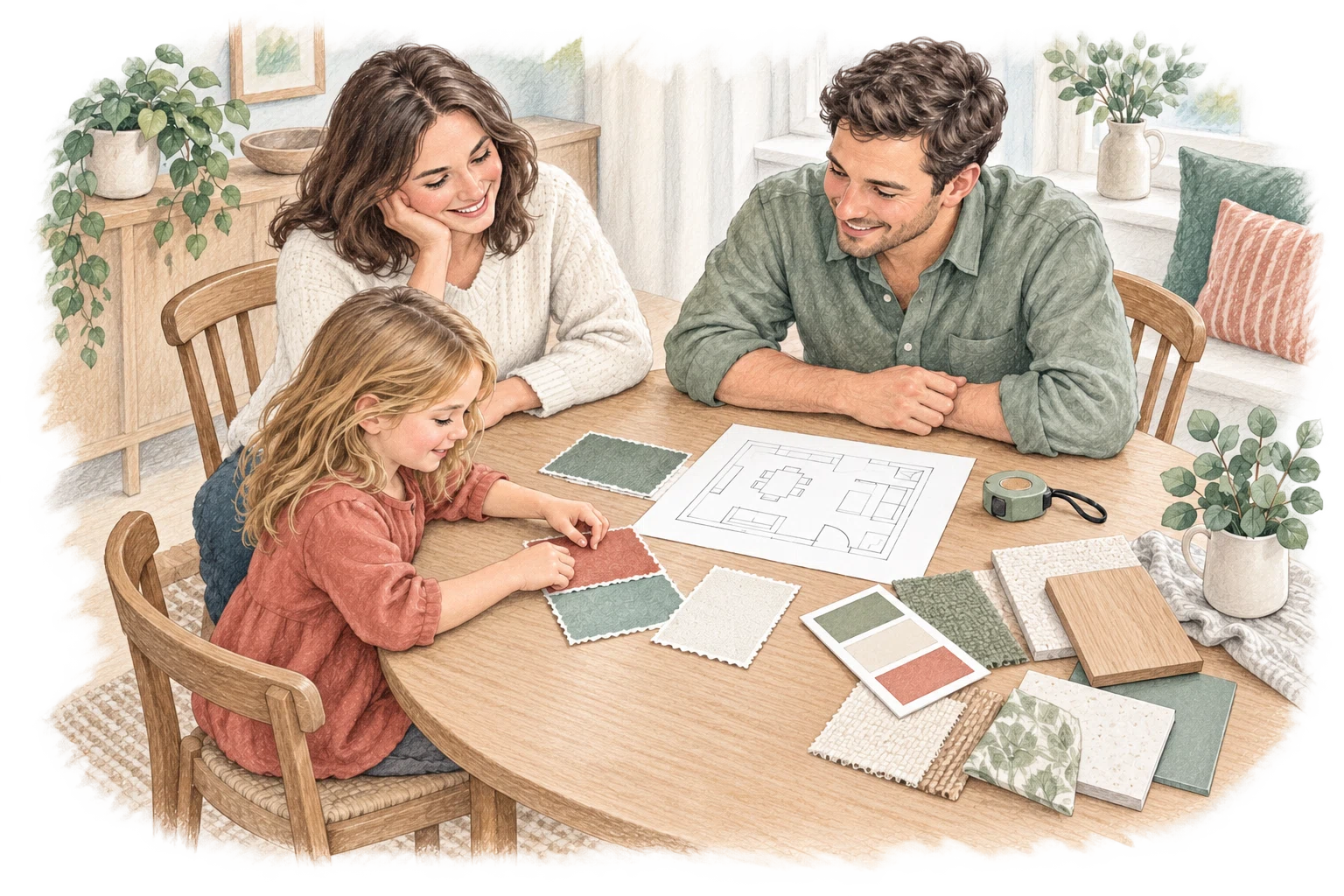
Ask your teenager to describe a weekday afternoon from their point of view. Where would they study, what would they do with friends, where would sports equipment go, and which old belongings would they keep? This creates a more useful brief than mood images alone. Images can then help communicate colours and atmosphere.
Make the parental parameters clear too: budget, elements to keep, technical possibilities and timing. Give genuine choice where decisions are genuinely open. Choosing a colour for an otherwise predetermined room offers less collaboration than comparing two workable layouts.
Essential
Comfortable sleep, a usable workplace and appropriate storage.
Personal
Music, sport, reading, friends and individual belongings.
Parameters
Budget, dimensions, retained furniture and technical conditions.
Open choices
Colours, pictures, textiles and the agreed alternatives.
A bigger bed alone does not make a new room.
A wider bed may be comfortable, but if the chair cannot pull out or the wardrobe cannot open, the room becomes less useful overall. Draw the complete arrangement, including space needed to use it. Hosting friends may not require another large piece: movable seating and a clear area can sometimes work better.
LAYOUT IDEA
Treat hobbies as more than decoration. Instruments, sports bags and creative equipment need storage of the right size that is actually accessible. For noisy activities, discuss the relationship with other rooms too; a bookcase does not replace a proper acoustic solution.
Let adaptable details express personality.
A calm wardrobe and a comfortable bed can provide the background for distinctive pictures, textiles and smaller objects. These are easier to change than a large fitted unit. If a strong colour is a current favourite, view a larger sample under evening lighting before deciding which surface suits it.
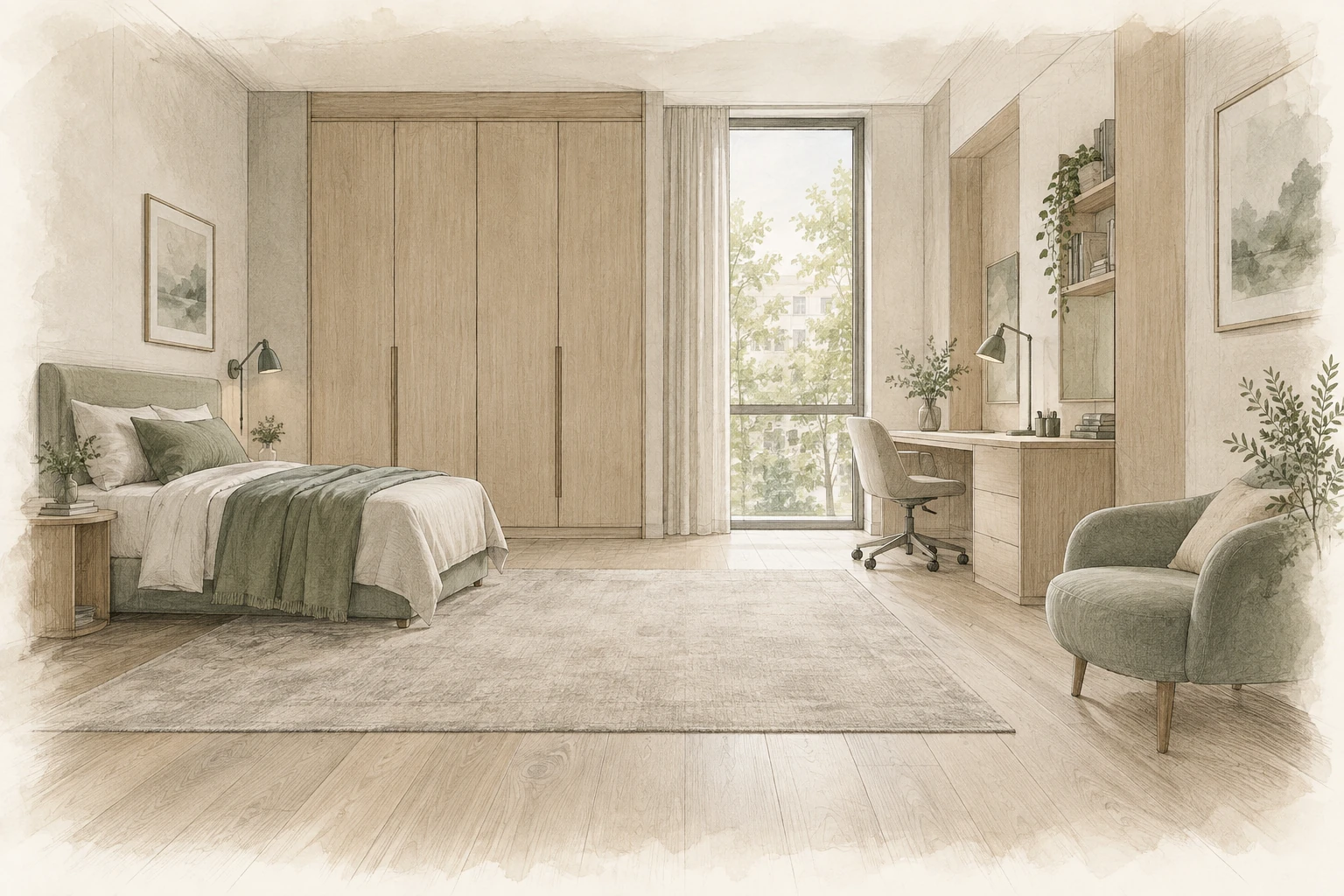
Reconsider good existing pieces in a new context. An appropriately sized desk can remain with a better position and new lighting. A wardrobe's internal arrangement may adapt to changing clothes. This directs the budget towards what is genuinely missing or uncomfortable.
Agree how the personal space works.
Knocking, hosting friends and belongings that spread into shared rooms cannot be resolved through furniture alone. Discuss them separately. Design can still support independence through a bag position, charging point and accessible laundry basket in the room itself.
CHECK YOUR OWN PLAN
- Your teenager's needs appear as concrete activities in the brief.
- Everyone understands the budget and areas of choice.
- The desk and storage remain usable beside the larger bed.
- There is an agreement about personal space within the shared home.
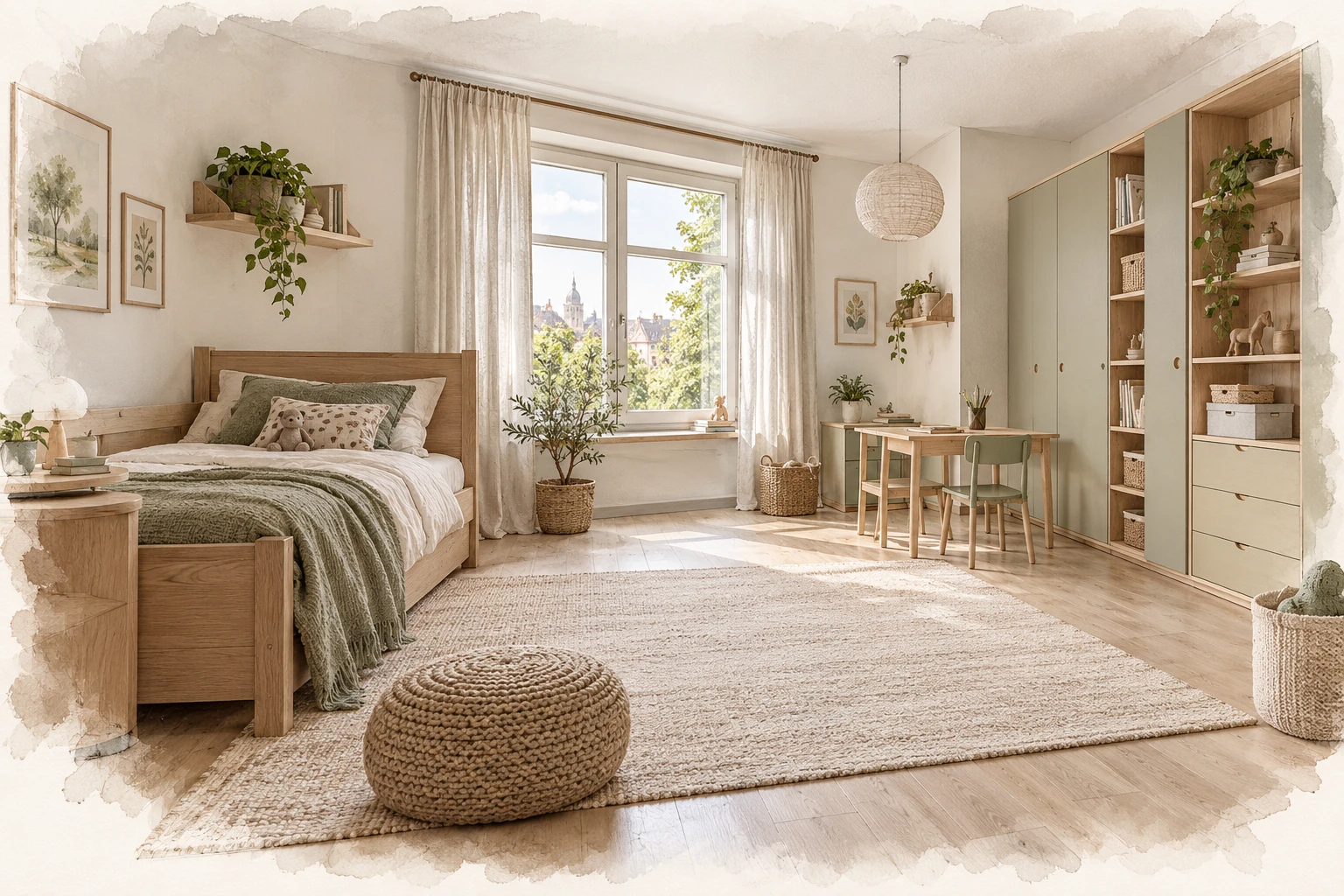
Begin the conversation before choosing a wall colour
An ordinary afternoon tells you more about a teenager’s room than a handful of inspiration photographs. When do they study, where do they talk with friends, what equipment do they use, and what regularly ends up on the floor? Identify three frustrating aspects of the current room and three qualities they would like to keep. The discussion then rests on concrete experience, making parental considerations easier to connect with it.
Next, unpack the reference images. A large bed may appear to be the attraction when the real appeal is a calm palette and an uncluttered background. An enormous desk might represent missing space for creative work. Understanding why a detail matters opens up solutions that fit the actual room and the family’s budget.
Clarify the boundaries of shared decisions too. Technical feasibility, budget and safety remain adult responsibilities, while the room’s personal character needs meaningful freedom of choice. Two developed, achievable options are easier to assess than an endless catalogue. The decision becomes shared when the occupant can shape the details that matter to them.
A wider bed changes the rest of the room
A larger bed may fit against a wall yet make the desk uncomfortable to use. Draw the outer bed frame, opening under-bed storage, chair movement and wardrobe doors together. Compare what is gained and what is lost before choosing a size. One striking piece should not make every other function inconvenient.
Receiving friends does not always require another large seat. A usable bed end, movable stool or considered use of the shared living room may help. A guest mattress, however, needs a place both stored and unfolded. Whenever an idea is accompanied by “we will put it somewhere”, return to the plan and identify where that actually is.
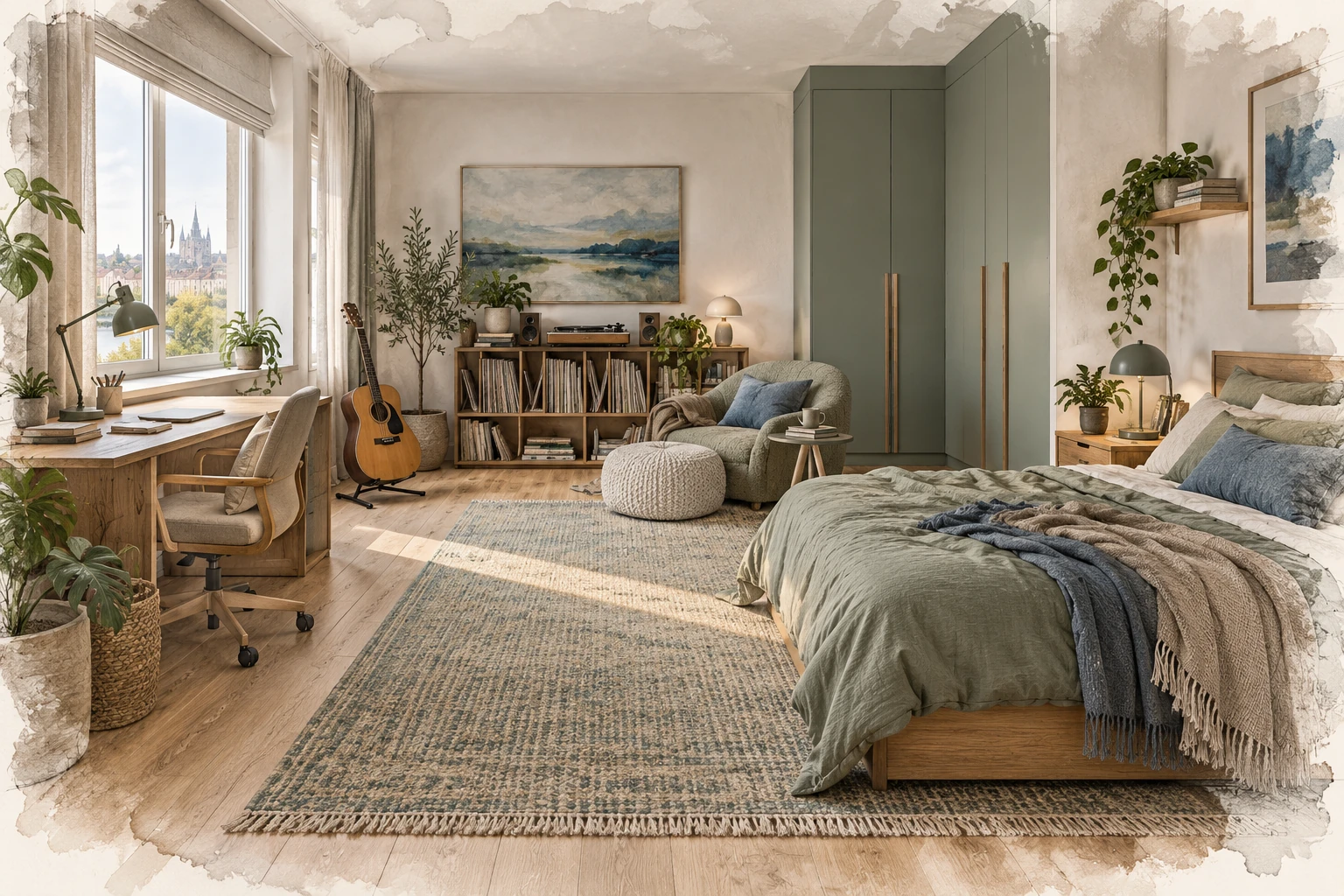
Put real hobby equipment on the plan
A guitar, drawing board, sports bag or digital device is more than decoration. It may need a different location and more space in use than in storage. Give the stand, charger, working light and finished creations identifiable places. Check dimensions against the actual objects rather than relying on a generic furniture symbol.
Walls offer possibilities too. A changeable display area or appropriately fixed shelf can help personal belongings appear in an ordered way. Heavy equipment requires fixings suited to the wall structure and chosen system. Technical coordination follows the visual concept; an attractive reference image does not provide installation instructions.
Privacy, sound and a room that develops gradually
Growing independence appears in spatial details. It can help if the desk is not forced into the most exposed view from the doorway and if personal belongings have some closed storage. Balance these needs with light, circulation and furnishing possibilities. Privacy does not have to mean a dark, isolated room; it can mean a predictable place that feels one’s own.
Textiles and upholstered furniture may soften the room’s reverberant feel, but they do not by themselves solve sound passing into the next room. Regular music practice or different schedules may require professional assessment of doors, walls and room relationships. Whole-home planning matters here: not every conflict can be resolved within the bedroom’s four walls.
If the room is completed in stages, begin with the foundations of a workable arrangement. Decoration and some accessories can follow later. This leaves time to try the space, and its personal character can develop gradually through use rather than being decided entirely on the day the furniture arrives.