

In this article
The guest room takes on a new role.
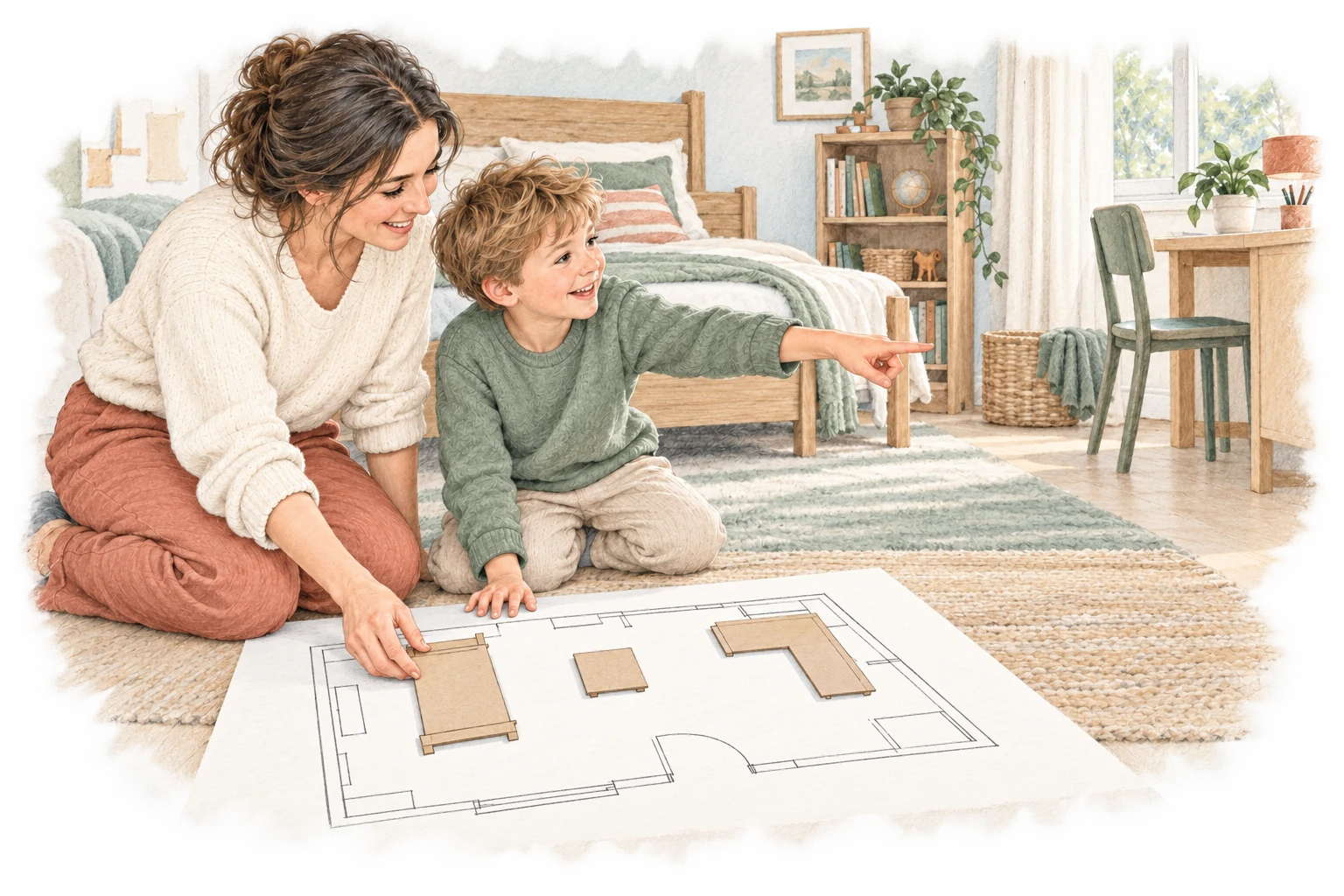
When a baby arrives, it is easy to organise every decision around the next few months. It is worth drawing a second sketch alongside: where will the larger bed go later, where will space stay open for play, and where would it be good to study?
This is not a final furniture list. It is a check that the wardrobe, lighting and connection points you install now do not close off every later option. Plan any electrical changes with a qualified professional.
Separate the lasting parts from the changing ones.
The position of storage, the circulation and floor and wall finishes that are harder to change are longer-term decisions. Textiles, pictures, smaller lamps and freestanding pieces can more easily follow a child’s changing taste.
A convertible piece of furniture is only useful if it still fits in its next form and you will really need it. Check the conversion conditions, dimensions and required accessories of the specific product.
Functions change together.
- Nursery: a comfortable seat for an adult, daily supplies close at hand and well-considered evening lighting.
- Toddler’s room: toys they can reach on their own, open floor and room for a shared story.
- School-age room: a suitable seat, a well-lit work surface and separate storage for school things.
- Teen room: study, hobbies, friends and the need to withdraw all ask for space.
These are not rigid age limits. Your own child’s habits and the room’s features matter more than the labels.
Two plans, three lists
Draw the current layout and a possible next one. Beside them, write: “we keep”, “we change now”, “we decide later”. This makes it easier to set priorities within your budget.
Ask them too.
As well as “what colour would you like?”, ask where they most like to play, what bothers them and what they cannot find a place for. An older child should have a say in how their own space is used. These answers are what make the room personal.
Editorial team: InteriorVibe Family · September 2026