
In this guide
- The shared spot should suit everyone.
- Let the light follow the activity.
- Let play stay half-finished.
- Parents need a place of their own too.
- Shared time needs an accessible place.
- One table, three arrangements.
- Make the light work for everyone.
- Allow quiet company too.
- Which shared moment needs a place?
- Try the seat rather than judging it only by appearance
- Where does an unfinished activity go?
- Being together while doing different things
The shared spot should suit everyone.
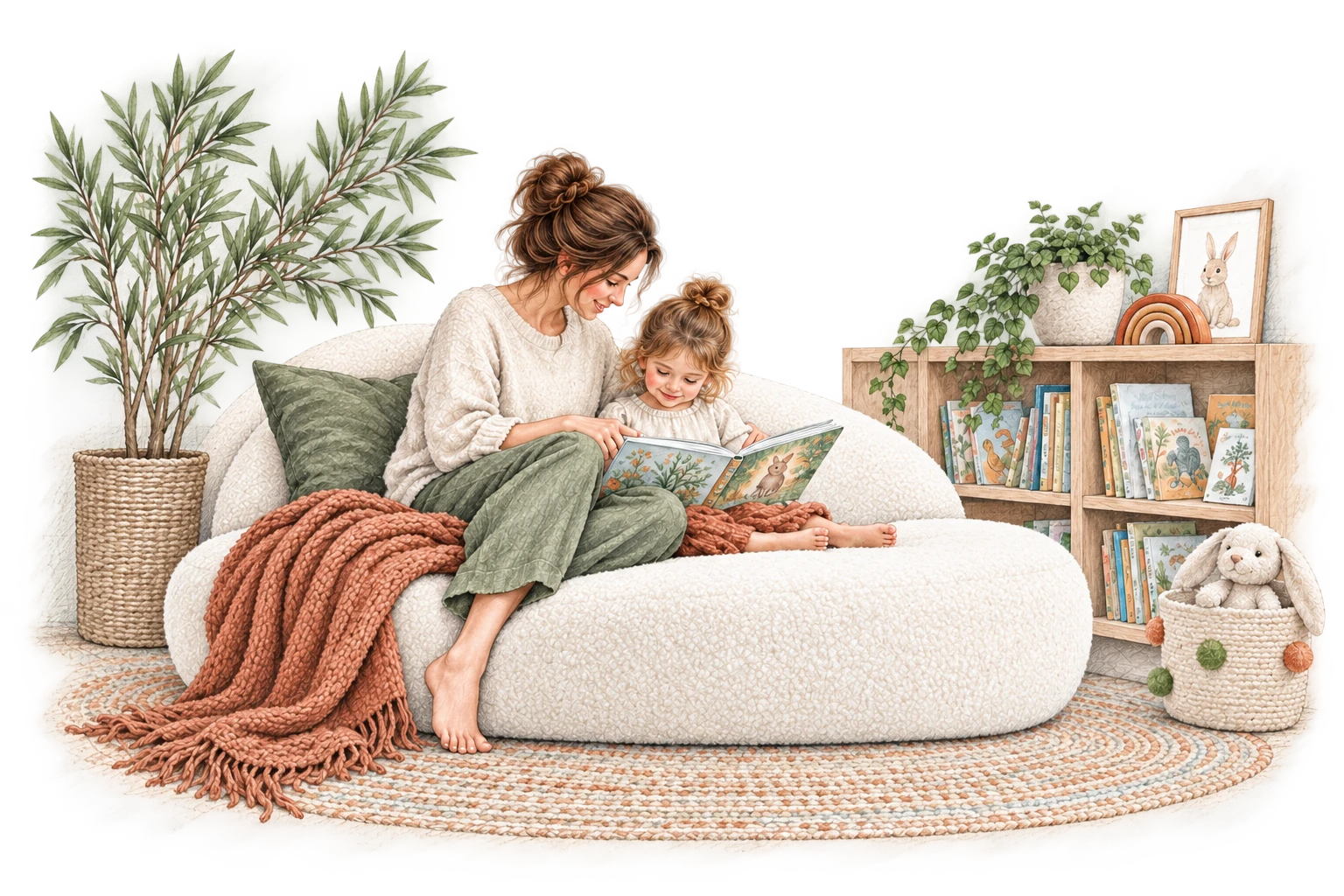
A child-sized armchair is a lovely detail, but the adult needs room at bedtime story time as well. Try the seat or the spot beside the bed together: can you see the book comfortably, is there something to lean on, and do you fit side by side?
A favourite nook need not be a separate piece of furniture. It can be one corner of the sofa, a shared bench or a calmer part of the bedroom. Start from where you already like to be together.
Let the light follow the activity.
When reading, the page should be clearly visible while the lamp does not shine in your eyes. A reading light on its own switch means you do not have to light the whole room brightly. Think about the position of the switch and the cable together with how the spot is used.
When drawing, notice where the shadow of your hand falls. And when choosing materials, take the sample to where it will be used: it can look different in daylight and in evening light.
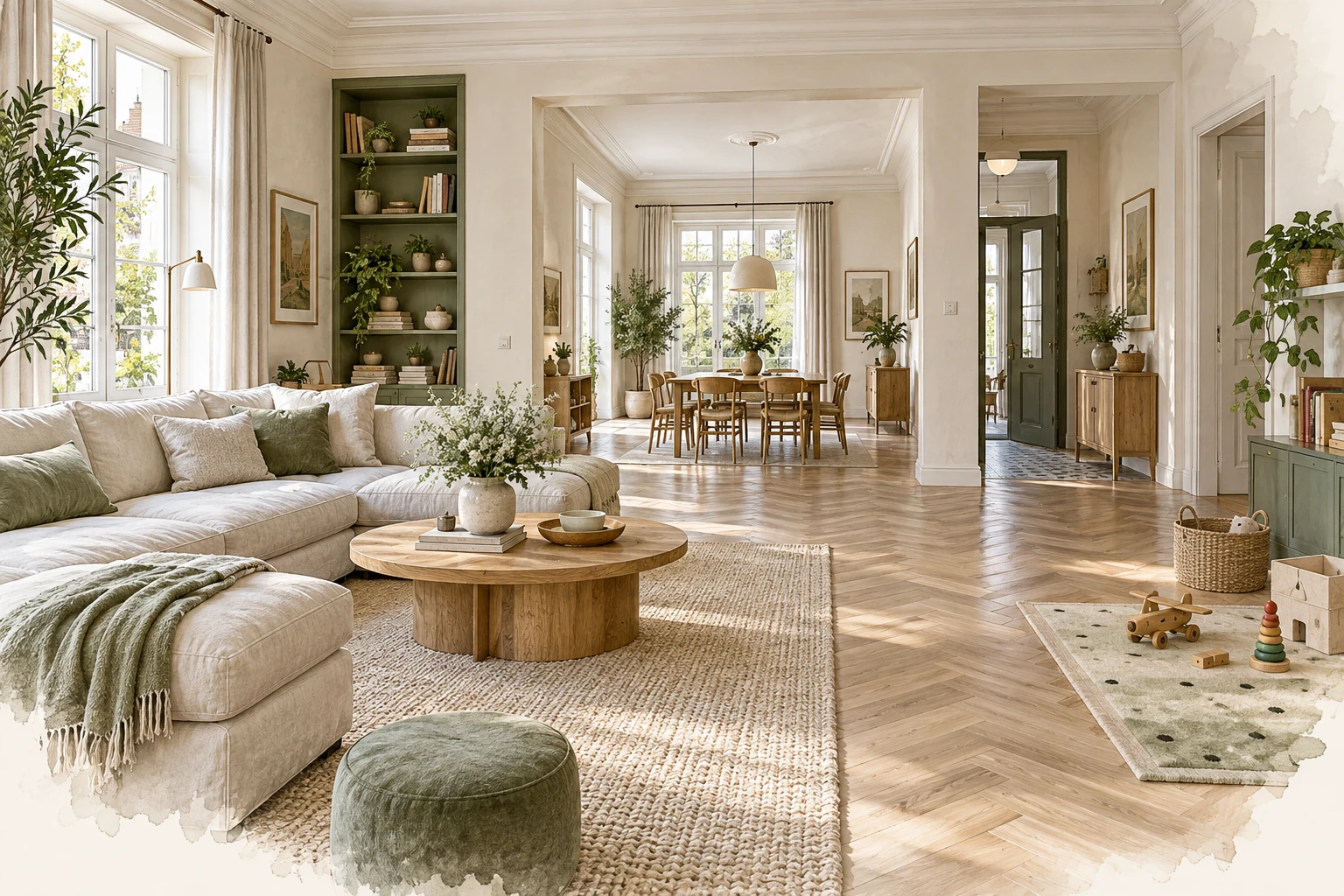
Let play stay half-finished.
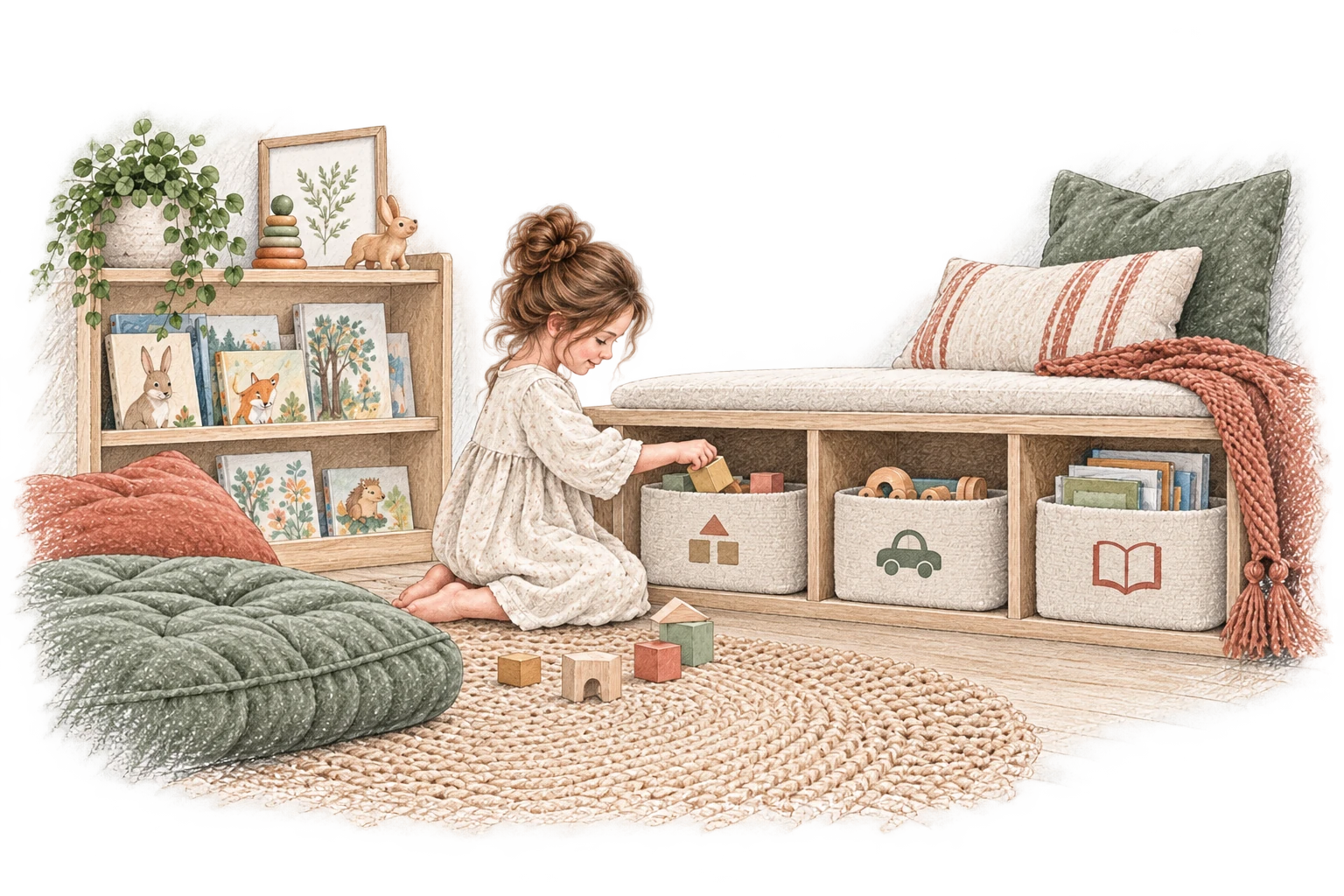
If every creation has to be taken apart straight away, it is hard to continue the story the next day. A dedicated tray, a section of shelf or a clear corner of the table can hold unfinished work. Keep the walkway clear, and agree together how long things can stay.
Today’s favourites can be close at hand, but not every toy needs to be on show at once. Shape the space around your family’s habits rather than an idealised photograph.
Your family’s own map
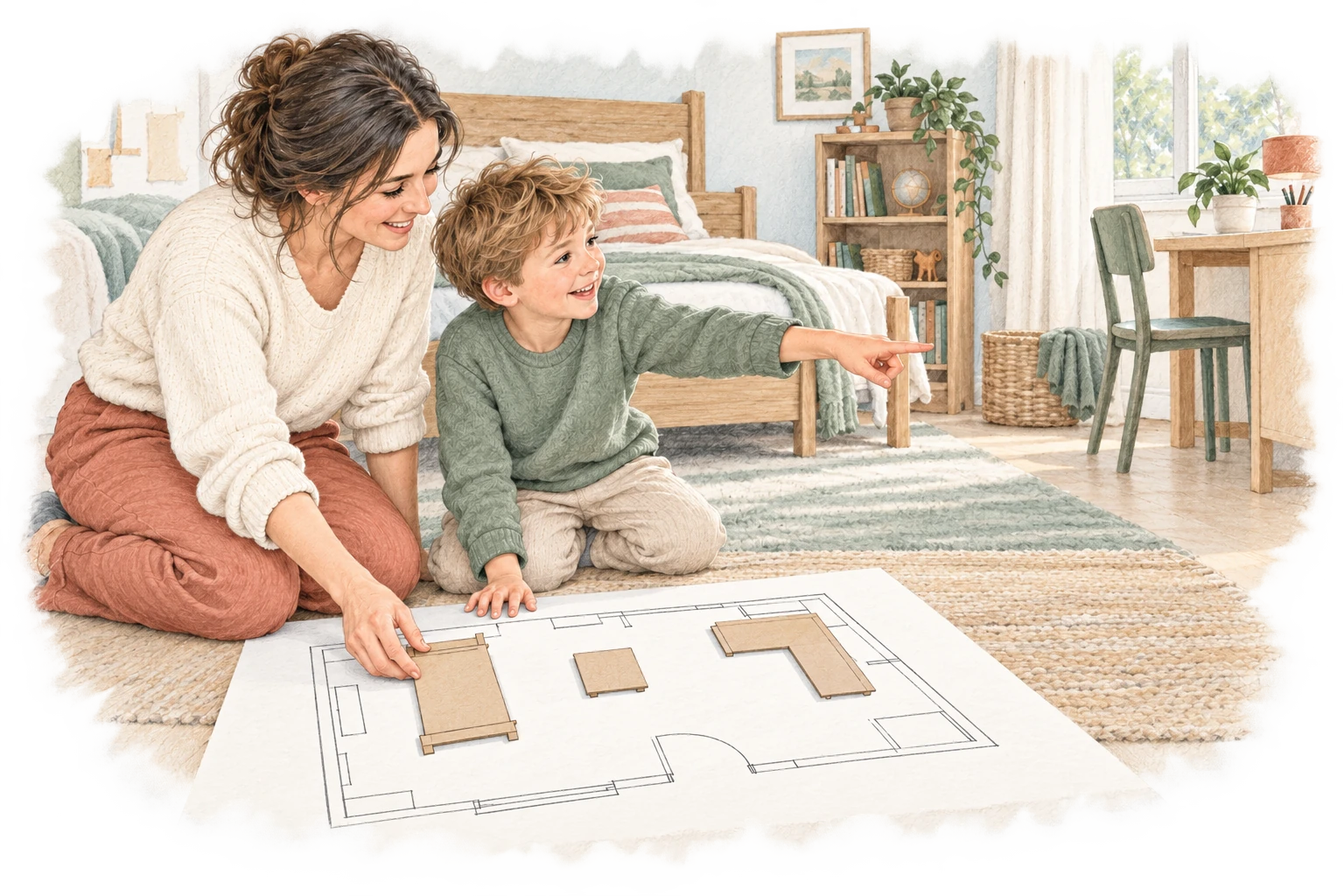
Each of you finishes this sentence: “What I love most is when we are at home together and…” Next to the answers, note where it happens and what would make it more comfortable. Choose a single change for the coming week.
Parents need a place of their own too.
A family home is not only about the children’s needs. A quiet reading spot, a usable work surface or a well-organised entryway can make the grown-ups’ days easier too. Shared space and the chance to withdraw together make a home complete.
ON THE DESIGN TABLE
Shared time needs an accessible place.
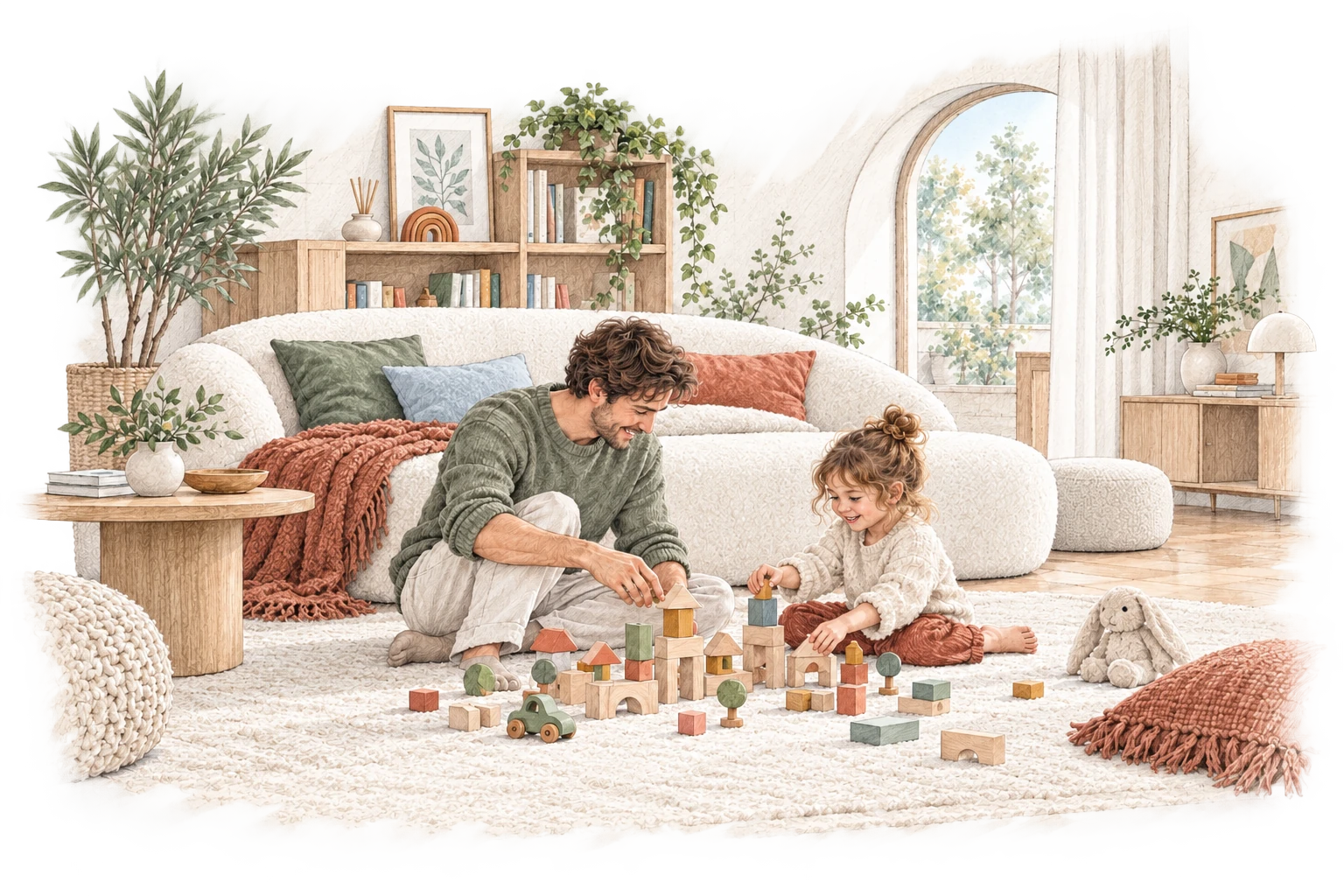
A family may not need a special “family corner” so much as a usable table everyone can sit around. When games are in a high cupboard, the lamp is distant and the table is always full, shared time requires preparation. A considered arrangement reduces this effort: games nearby, a surface that can be cleared and comfortable seating.
Choose a habit that already happens regularly. Reading together, baking and board games need different places. Begin with the ordinary twenty minutes you genuinely have, rather than an imagined perfect Sunday.
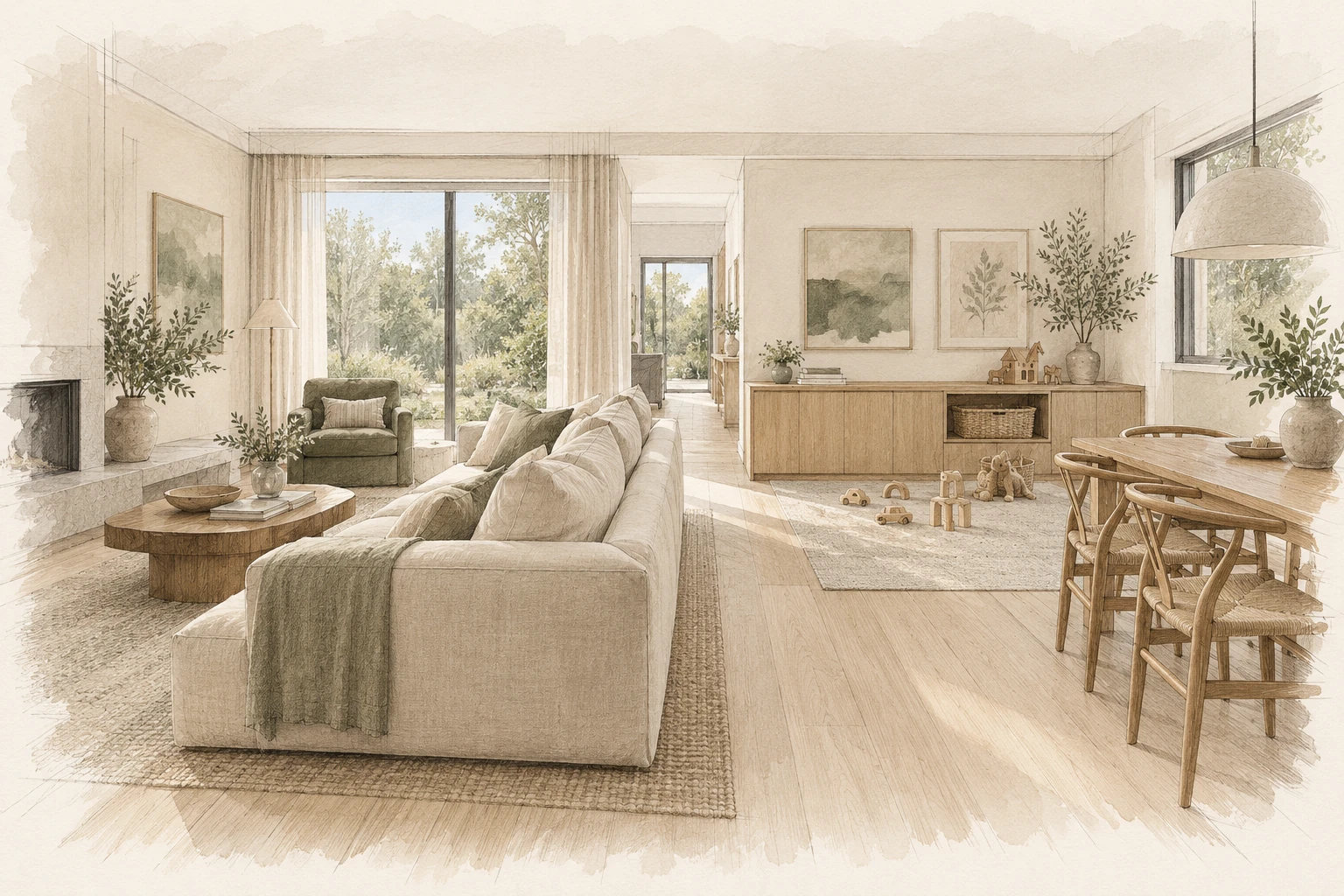
One table, three arrangements.
An imagined family uses the same table for meals, afternoon making and weekend games. Paper, drawing materials and favourite games have separate places in the sideboard. An unfinished puzzle stays on a rigid board with a storage place already checked to fit. It does not have to be dismantled before dinner, and setting the table can begin on a clear surface.
Meals
A clear surface, comfortable seating and accessible tableware.
Making
Surface protection suited to the material and nearby supplies.
Playing together
Even light and a playing area everyone can reach.
A pause
Unfinished work has a separate storage place.
Try the solution with the actual object. A large puzzle board or drawing board can easily exceed a cupboard's internal width. Instead of assuming it will slide somewhere later, measure a place where it can be stored and retrieved safely.
Make the light work for everyone.
When reading together, notice which seats have a view of the book and where shadows fall. At the table, check for reflections on glossy game surfaces. Good lighting involves more than the appearance of a fitting: position, direction and separate control are part of the design.
LAYOUT IDEA
Where family members of different heights use the same place, consider the seat and surface together. Children need stable seating appropriate to them. Avoid making comfortable use depend on improvised stacks of decorative cushions.
Allow quiet company too.
Being together does not always mean doing the same thing. One person reads, another draws and someone else simply sits nearby. A well-organised living room can support this. Keep a quieter seat away from the main thoroughfare, with its own light so using it does not require brightly lighting the whole room.
CHECK YOUR OWN PLAN
- One shared surface is easy to clear.
- Favourite games and books are nearby.
- Activities can be paused without creating an unmanageable pile.
- There is also a usable place for quieter company.
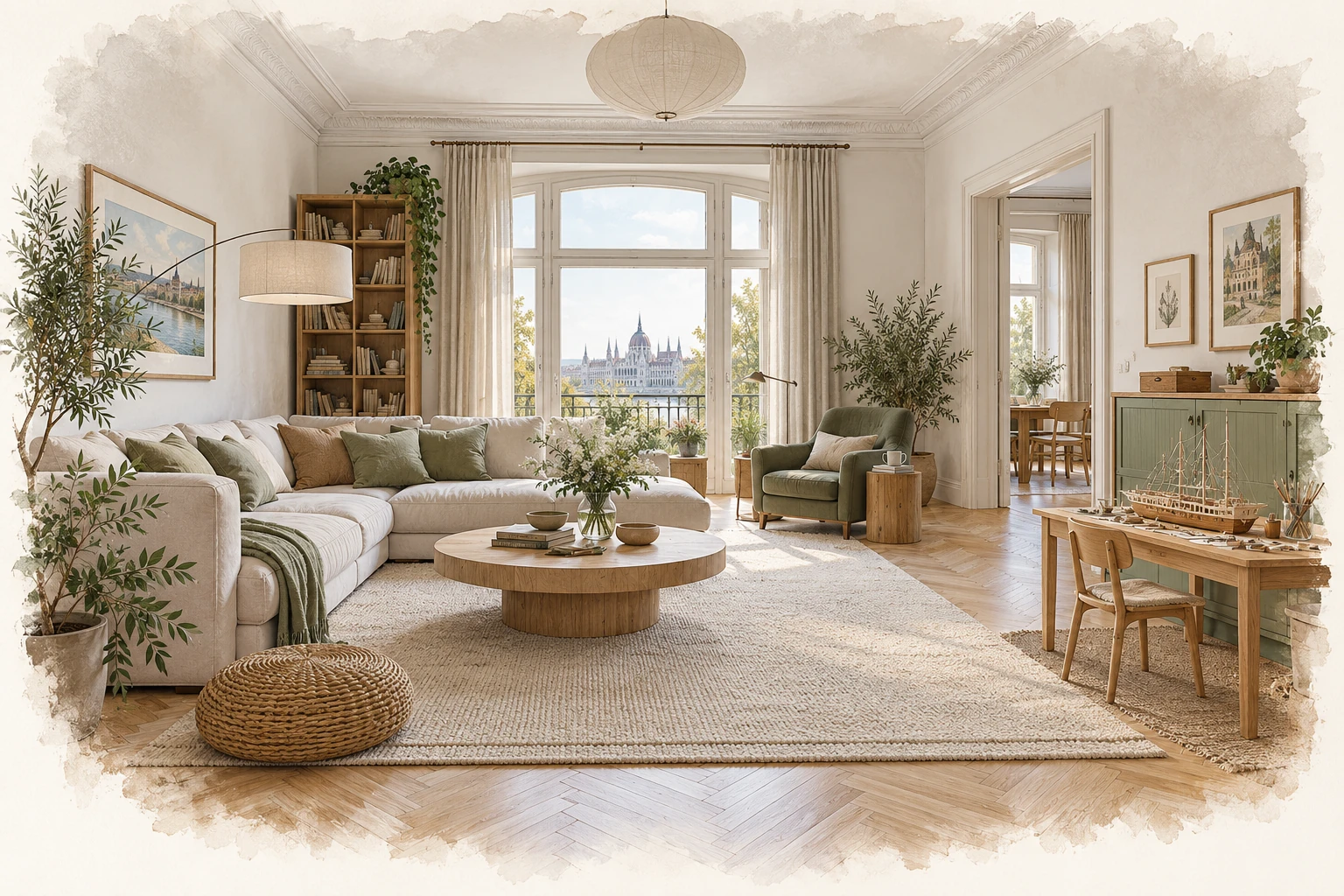
Which shared moment needs a place?
A ten-minute breakfast, a long Sunday lunch and evening reading each ask something different of a room. Before choosing furniture, identify two or three situations that currently lack a comfortable place. The missing element is often not a seat but suitable lighting, nearby belongings or the ability to sit down without making somebody else stand up. A clearly described habit can be designed for.
Breakfast belongs near the kitchen, but another row of bar stools is not always the answer. The more accessible side of the dining table may work better once crockery and morning bags have sensible places. For evening reading, a quieter edge of the living room or a comfortable seat near the children’s rooms may be more useful. Different parts of the home can support different rhythms.
A shared place need not be formal. A bench facing the kitchen, a small table near the garden or a well-lit edge of a rug can become an important family spot. What matters is that it feels natural to use and does not require the entire room to be prepared every time.
Try the seat rather than judging it only by appearance
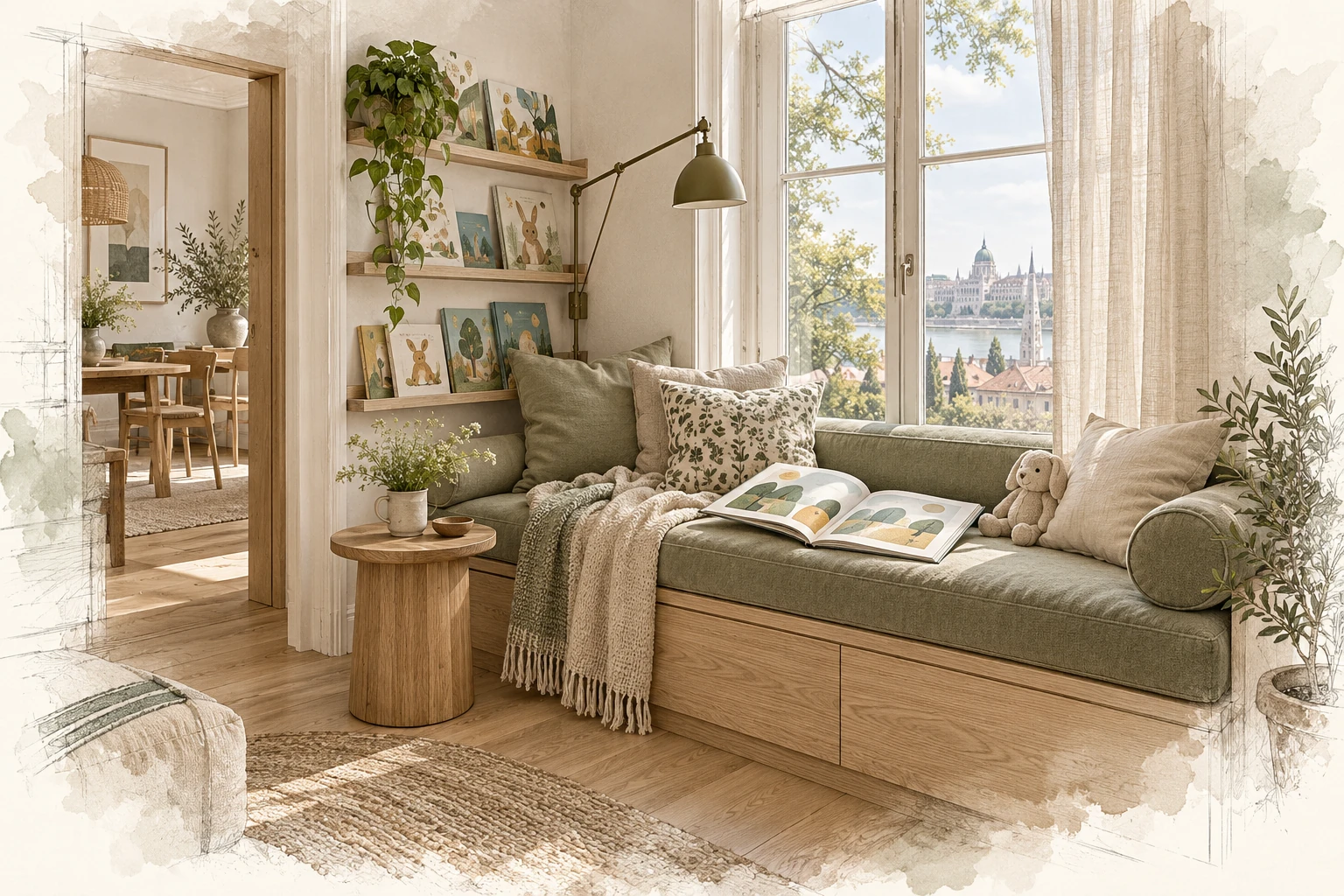
An attractive window nook is not necessarily comfortable. Depth, seat height, back support and cushions together determine how pleasant it is to stay there. When an adult and child read together, side support and room for their legs matter too. Details should suit the intended users; proportions from a photograph cannot simply be transferred into another home.
For a window seat, heating, curtains, window operation and cleaning are also design questions. A radiator should not be enclosed casually, and a lifting storage lid is inconvenient if all the cushions must be removed daily. Sometimes a freestanding bench or armchair offers more flexibility than a complete fitted recess. The architectural conditions help determine which option deserves further development.
Where does an unfinished activity go?
Shared time is often shortened by the difficulty of stopping. The puzzle is incomplete, paint is drying or a model should stay intact until tomorrow, but the table is needed for dinner. A nearby horizontal surface or appropriately sized tray may help more than another basket. Temporary places for belongings deserve as much thought as permanent storage.
Near a creative table, separate places for used paper, completed work and equipment make the process easier. A cleanable surface and a movable protective mat allow more relaxed use. The route to a sink matters as well: if washing hands always means passing close to pale upholstery, the room continually asks the family to be cautious.
Storage does not have to hide family life. A few chosen drawings or things made together can have a permanent display area. A small surface that changes over time is easier to manage than showing the entire collection, and gives proper attention to what currently matters to you.
Being together while doing different things
A shared room does not always host a shared activity. One person may read while another draws and dinner is prepared nearby. This needs proximity without forcing everyone into the same task. Separately controlled lights, seats turned slightly away from each other and clear passages help a room welcome several people at once.
Loud and quiet activities sometimes require more substantial separation. A rug or curtain may affect the room’s acoustic feel, but it cannot replace a suitably designed room that can be closed. When music and concentration regularly conflict, review room functions and door connections across the home. The ability to withdraw is part of family closeness too.
A useful design conversation therefore covers both the moments you want to share and the activities that need their own conditions. The answer may be a small adjustment to one seat, or it may involve changing how several rooms work together. Start with the actual situation and let the scale of the solution follow it.