
In this guide
- See what happens at the same time.
- There are three different storage tasks.
- Make the parents' seat truly usable.
- A shared room can have a quieter corner.
- The position of the rug is a layout decision.
- The same room in the afternoon and evening.
- Keep adult seating available.
- Try one change in a single evening.
- The shape of the room tells you more than the size of the sofa
- What do you face when you sit down?
- One living room can have several kinds of evening light
- How does a playful afternoon become a calm evening?
See what happens at the same time.
Drawing at the table, building on the floor, talking on the sofa: these do not necessarily disturb one another. A railway built across a walkway or a painting drying on the dining table, however, can cause trouble the next day. Place simultaneous activities on the floor plan, not only objects.
Mark the routes between the doors, the kitchen and the balcony. The most sheltered stretch of floor can become the place for building. And find a dedicated tray or shelf in advance for keeping unfinished play.
There are three different storage tasks.
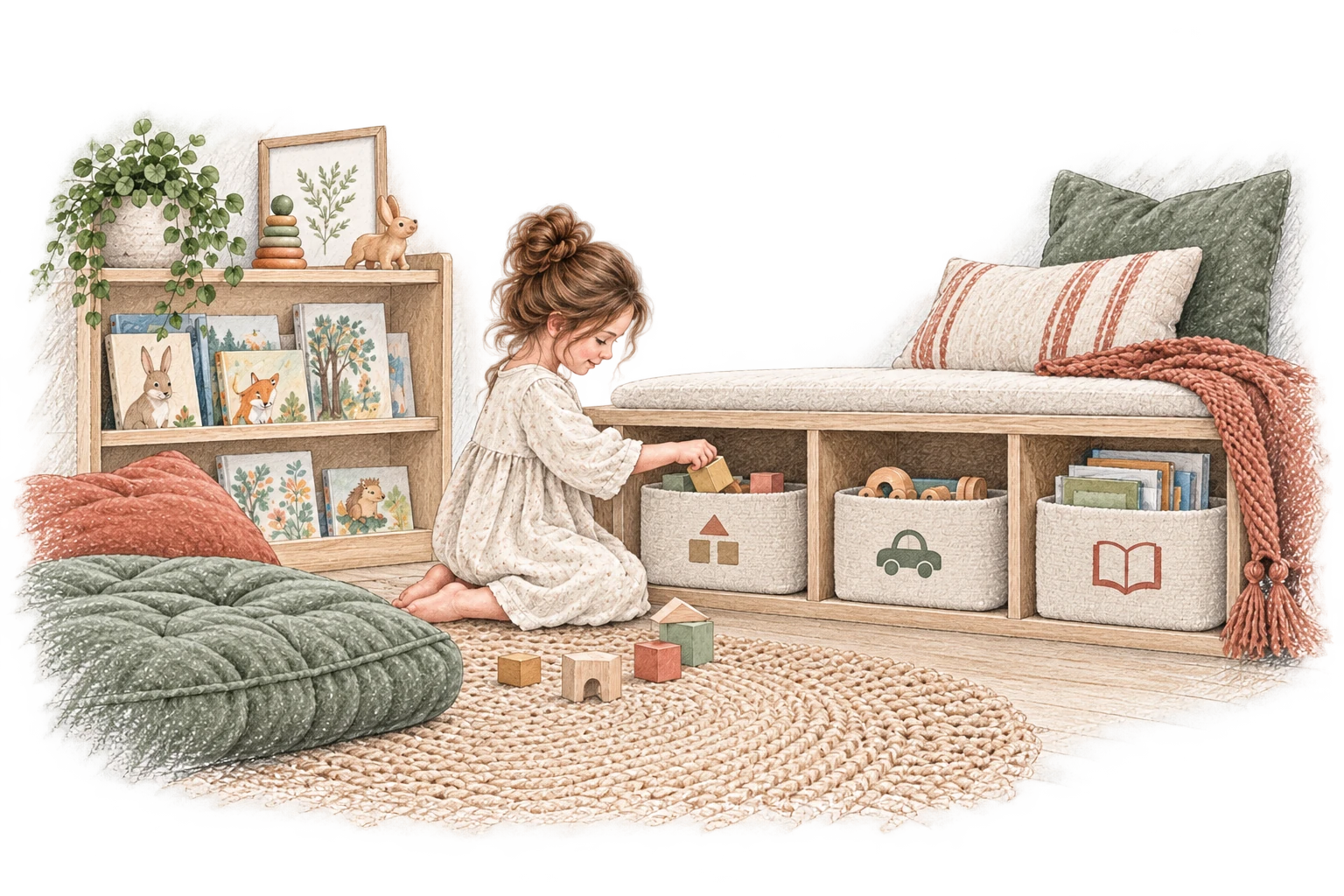
- Within reach: the few books or toys you reach for every day.
- Put away in the evening: sets whose box is easy to carry to the play area and back again.
- Waiting to be continued: a construction or creation you would rather not take apart every day.
If all three go into the same basket, finished work can get damaged and favourites can disappear. You are not necessarily looking for three new pieces of furniture, just three clearly distinct places.
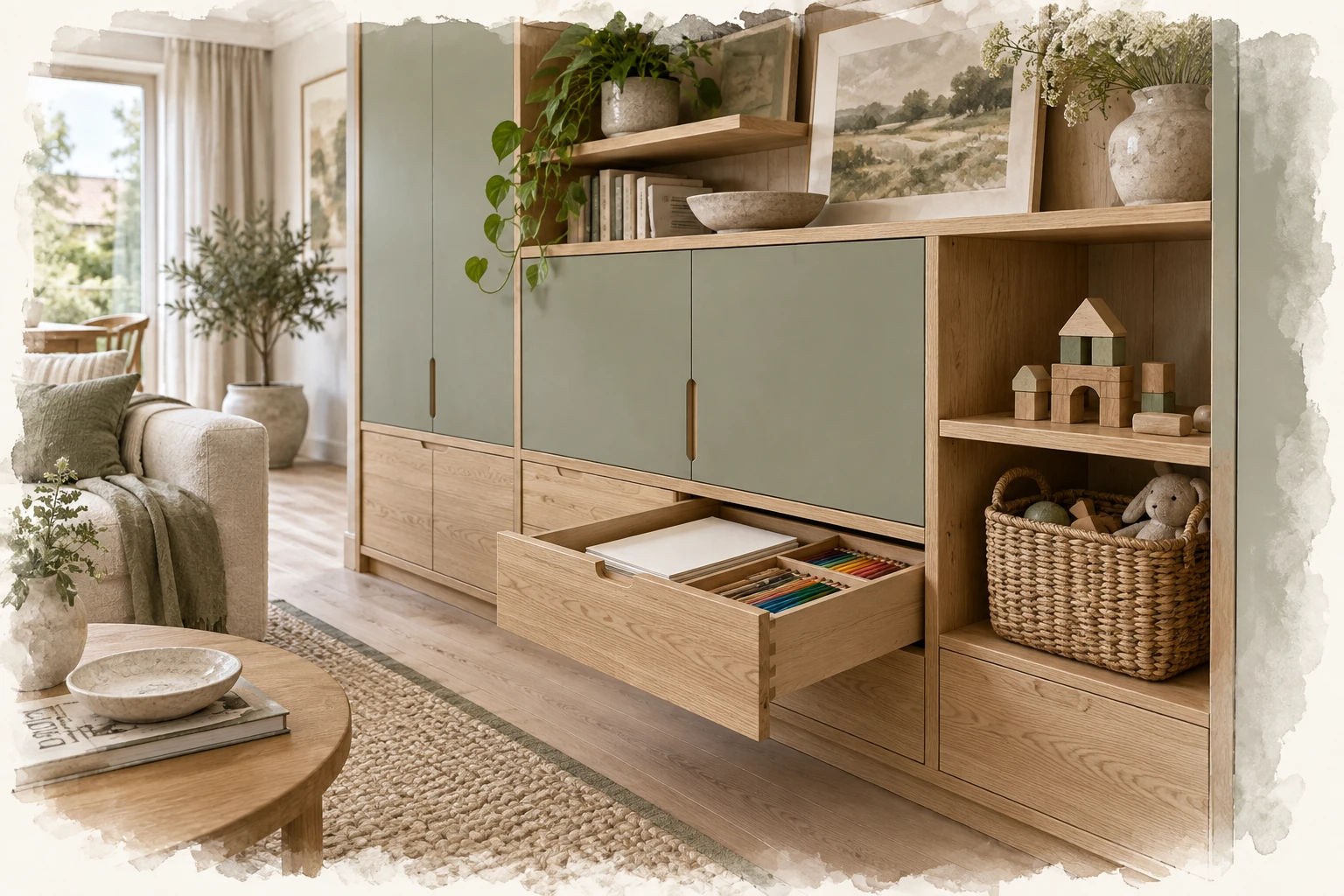
Make the parents' seat truly usable.
If the armchair is always a coat stand, the charger hides behind the reading lamp and toys have taken over every surface, the seat exists only on paper. Set aside a small surface that can be cleared with a few moves in the evening.
Think of guests too, but do not let a rare large gathering crowd out everyday life. Extra seating that comes out when needed, or a small movable table, can cover the occasional need, as long as it has a proper place to be stored.
The two faces of the living room
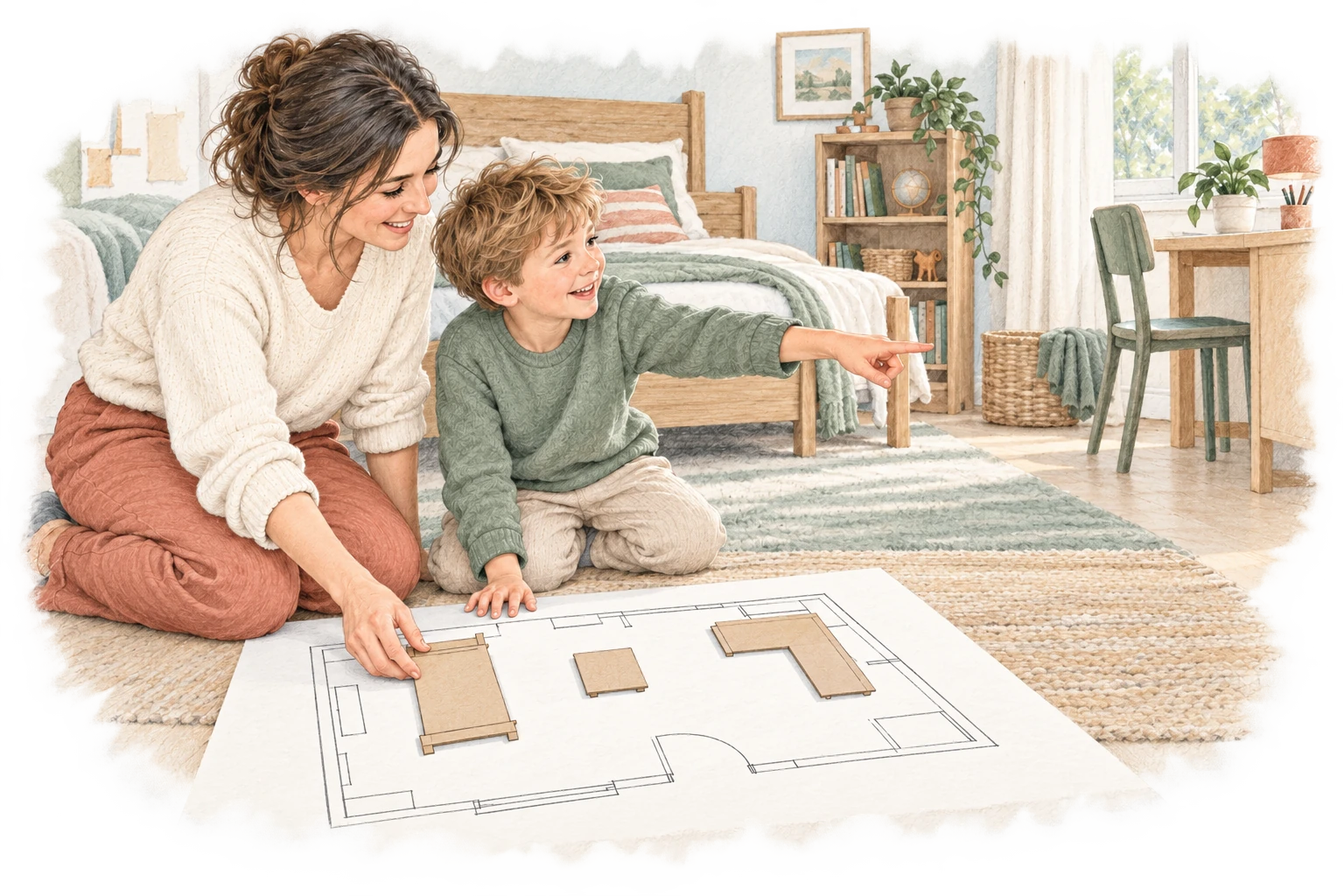
Draw an afternoon version and an evening version. Circle what needs to move. Next to every item that moves, write where it goes. If all it says is “we'll tidy it away”, the plan is still missing a decision.
A shared room can have a quieter corner.
The direction of a seat and a light of its own can signal that this is a place for reading or rest. Textiles and rugs can change how a room sounds, but they do not create a soundproof separate room. If remote work and noisy play regularly happen at the same time, it is worth rethinking how the whole home is used.
Finally, try the space out together. A living room that works for a family does not always stay arranged the same way: putting it back needs to be simple and clear.
ON THE DESIGN TABLE
The position of the rug is a layout decision.
When play occupies the route to the kitchen, every construction becomes an obstacle. Mark the natural routes between doors before placing the sofa, table and play rug. A large dedicated children's corner is not always necessary. A well-positioned clear floor area can offer more, without asking anyone to move aside whenever someone passes.
Keep play storage within the same zone. Boxes buried in a tall cupboard are harder to use independently than an accessible, appropriately designed lower compartment. Furniture fronts that belong to the living room can provide a calm backdrop for changing toys and books.
LAYOUT IDEA
The same room in the afternoon and evening.
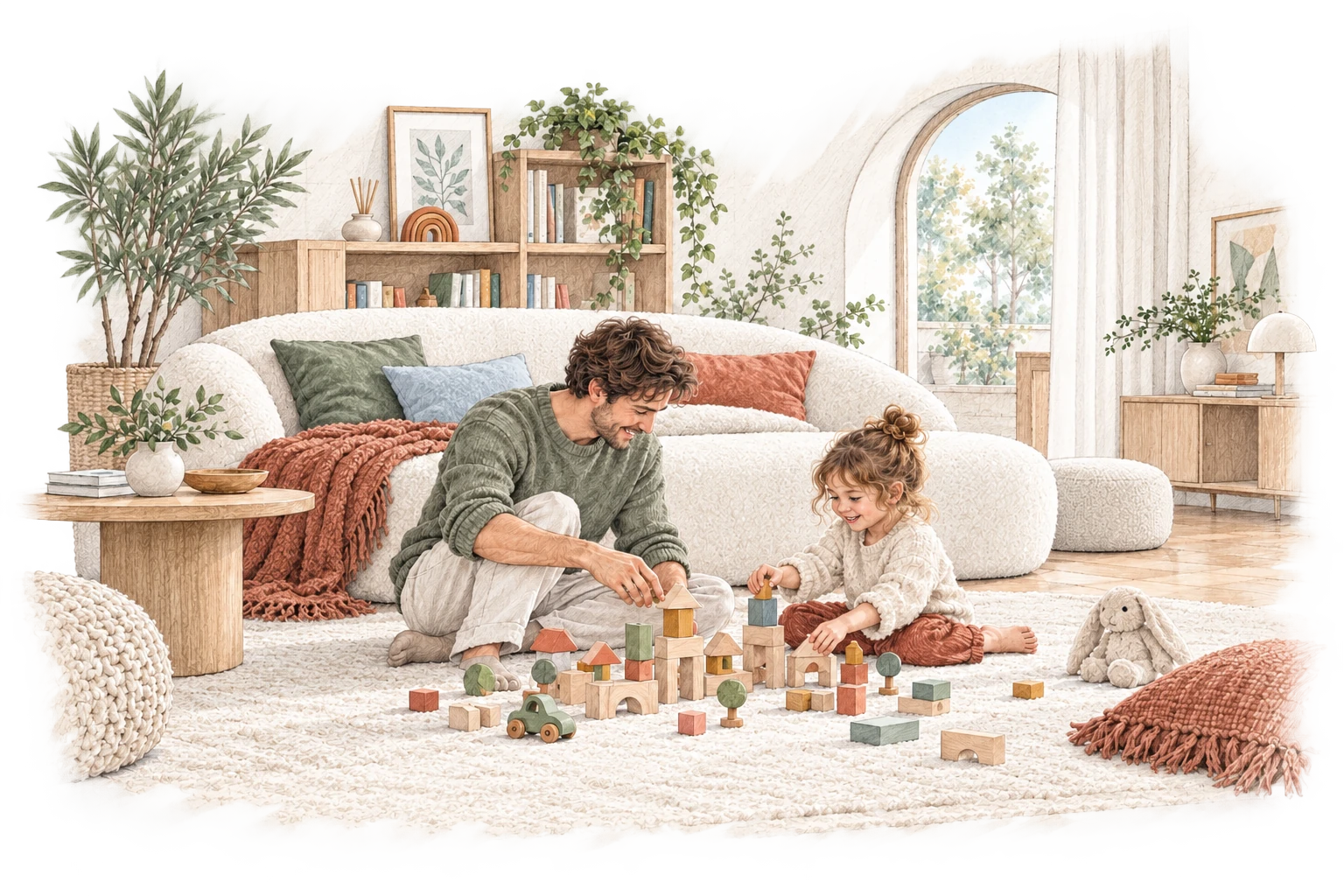
Imagine a weekday afternoon with play on the rug and drawing at the table. Before dinner, drawing materials return to a nearby drawer and unfinished work moves onto its own tray. A model may remain within a designated area; other pieces return to closed storage. In the evening, reading and ambient lights take over from general lighting.
This does not require perfect tidiness. It creates an evening arrangement that takes a few clear steps to achieve. Furniture supports the transition when storage, a nearby surface and separately controlled lighting are where they are needed. One ceiling light and a distant toy cupboard require more effort from the family.
In use
On the rug or table, within an actual designated area.
To continue
On a separate tray, shelf or reserved surface.
To put away
In accessible storage organised by contents.
Time to rest
With usable adult seating and separately controlled lights.
Keep adult seating available.
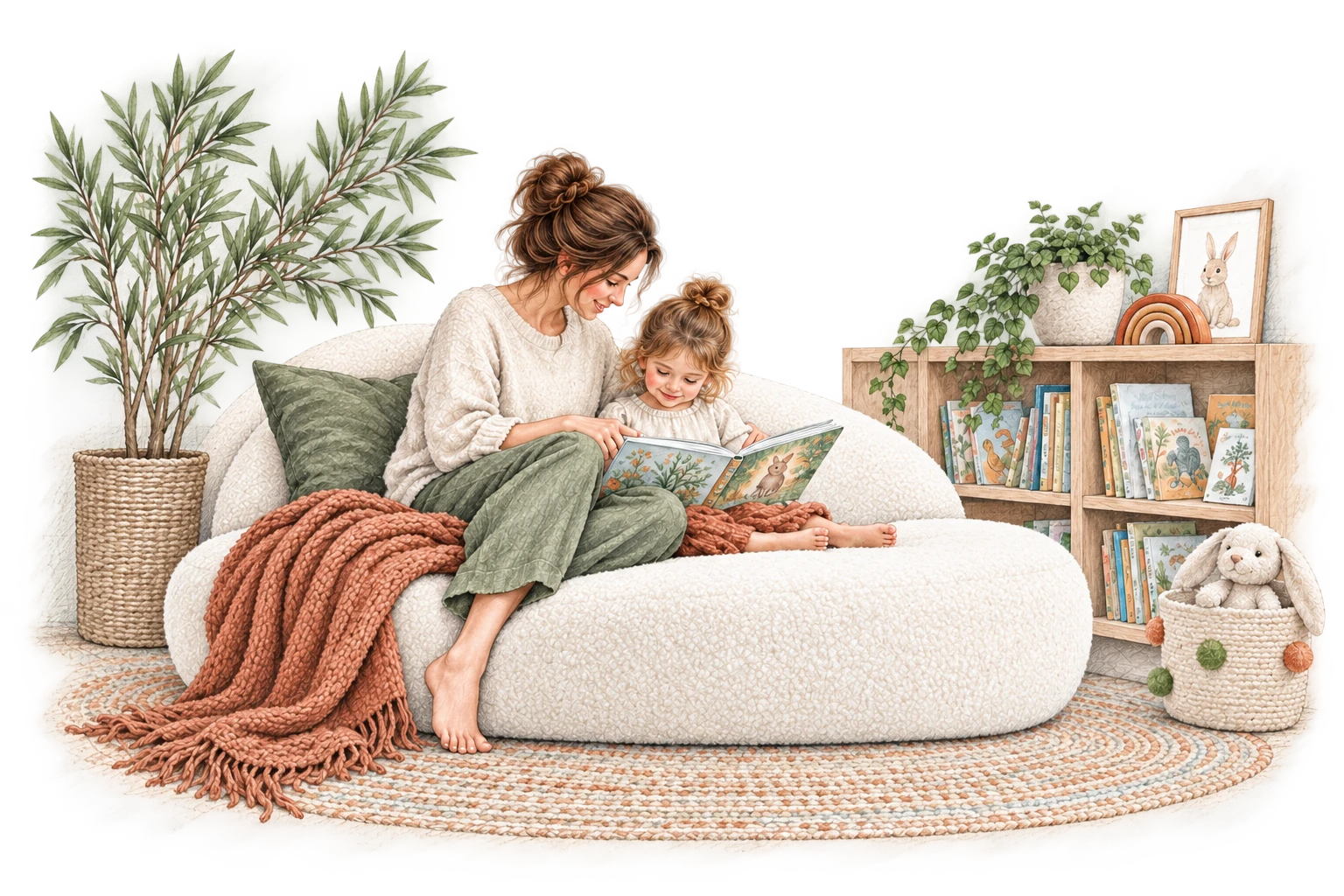
Check whether everyone can actually sit down together. Clothes piled on a chair or a permanently occupied section of sofa often indicate that another activity lacks a home. Reading, conversation and parents' rest are genuine uses of the living room, just like children's play.
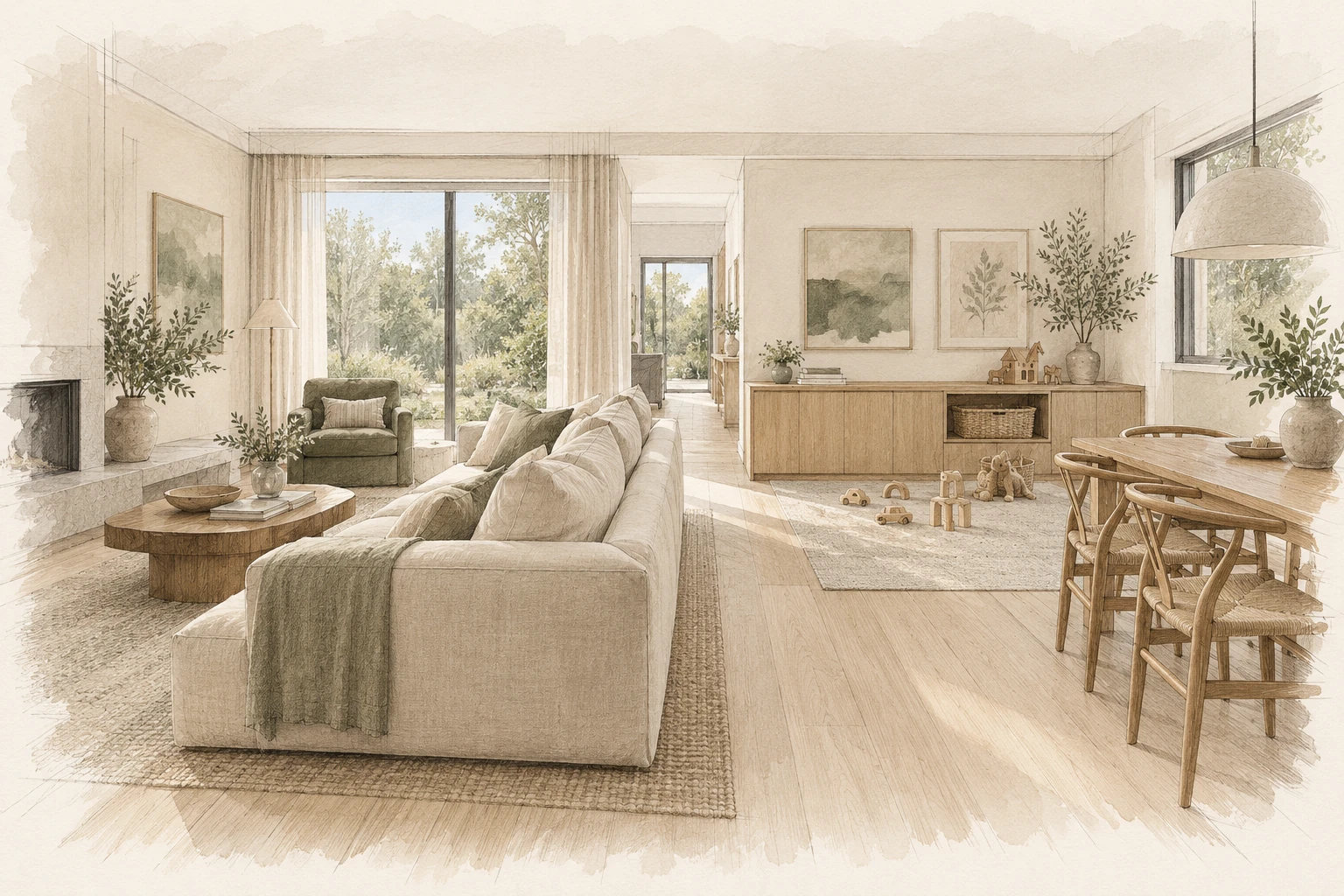
Soft materials and a rug can make the room inviting, but consider their cleaning requirements too. Choose larger furniture in relation to the room and its routes. A smaller sofa may create a more comfortable overall arrangement when it leaves the rest of the room usable, compared with a larger one that dictates every movement.
Try one change in a single evening.
Choose one play area and its associated storage. Try dinner, tidying and adult relaxation on the same evening. Mark anything that repeatedly gets in the way on your plan. This reveals which furniture positions are worth reconsidering.
CHECK YOUR OWN PLAN
- Play does not obstruct routes to the kitchen, terrace or bedrooms.
- Unfinished creations have an agreed place.
- Adult seating remains available.
- The evening arrangement is straightforward to restore.
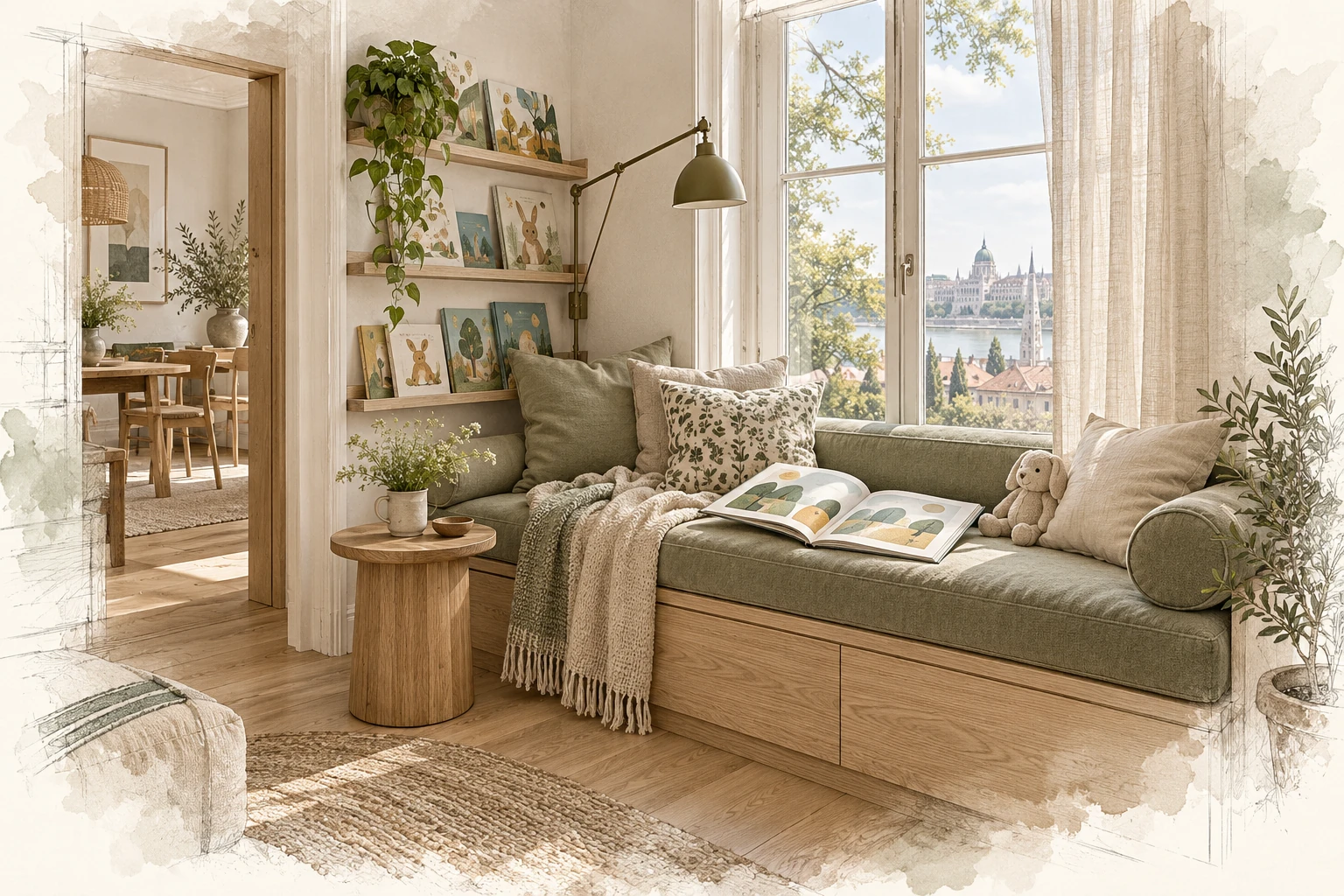
The shape of the room tells you more than the size of the sofa
A long, narrow living room needs a different arrangement from a nearly square one. In the first, the strip between the sofa and the opposite furniture can easily become a corridor. If play occupies that strip too, every passing person interrupts the activity. Consider whether the far end could provide a usable area outside the route to the balcony or bedrooms. Sometimes a smaller sofa creates more genuine comfort.
In a square room, furniture often lines every wall while a large, awkwardly defined area remains in the middle. Turning the sofa or moving a low storage unit can create two useful places. Plan the back of the furniture as well: will it be visible, can you clean behind it, and is there space to pass? A furniture island only works when every side has been considered.
In an open-plan kitchen and living area, dining and cooking also affect the layout. Keep play away from the route used to carry hot food. Check dining chairs when pulled out, the dishwasher door when open and the passage behind the table together. This connects the living room to the operation of the whole home.
What do you face when you sit down?
Orient furniture around what your family actually does. If conversation matters, two seats facing one another may offer more than a single long sofa. For shared films, sightlines to the screen matter. An evening reader needs a real place for a book and drink, plus separately controlled light beside their seat. Naming a function does not by itself create a comfortable place for it.
Keeping play visible does not mean everything must occupy one completely open surface. A view of the free floor from one end of the sofa or from the dining table may be enough. A tall backrest, oversized armchair or densely filled open shelf can interrupt that connection. Check important viewpoints while seated as well as standing.
The view outside is valuable too. With a window overlooking a garden, every seat need not face the media unit. Compare what you would see with morning coffee and from the sofa in the evening in each layout. That difference can matter more than the style of the furniture itself.
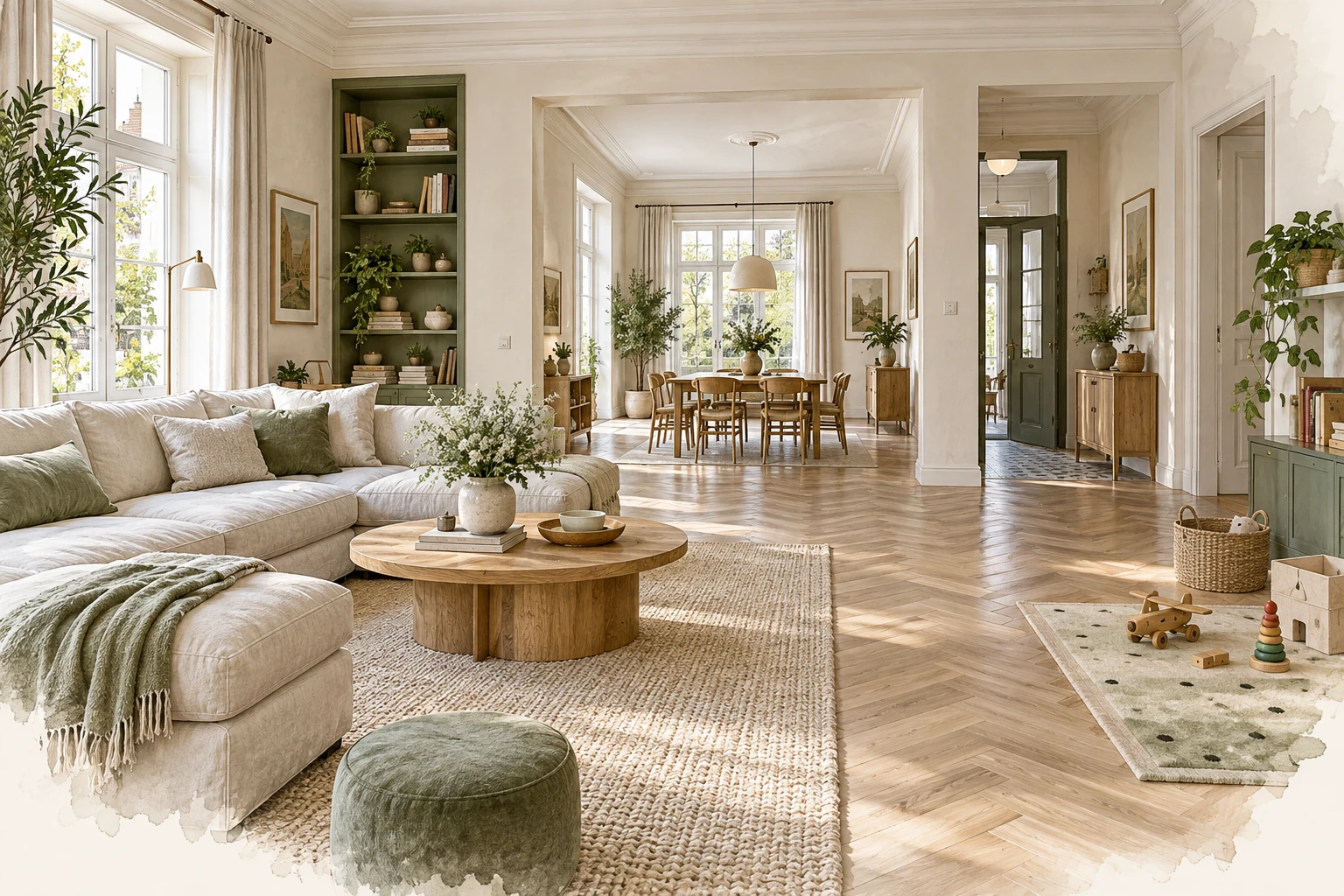
One living room can have several kinds of evening light
Ceiling lighting alone rarely serves every situation. Tidying toys may call for more even light, reading for local light and conversation for a quieter atmosphere. Plan fittings around the furniture layout early, or extension leads and inconvenient floor lamps may later compensate for missing electrical points. Agree electrical details with the appropriate professional.
Check reflections in screens and glossy surfaces in both daylight and evening conditions. A striking pendant can be distracting when reflected in a television, while strong window light can make a screen difficult to see. Position, shading and light sources need to be coordinated; simply choosing a stronger or weaker lamp may not resolve the issue.
How does a playful afternoon become a calm evening?
Imagine a room regularly used for building blocks, drawing and board games. Each needs a different way to be put away. Blocks can go into an accessible container, drawings may need a flat drawer, and an unfinished game might use a tray that can be moved aside. If everything goes into one deep chest, the next activity begins with emptying it again.
The evening change should involve only a few manageable actions. Avoid arrangements that require heavy furniture to move or boxes to be brought from a bedroom. A throw, two useful reading lights and a clearer floor already create a different atmosphere. Decide which belongings need to disappear from view and which can remain a natural part of the shared room.